
CUET UG Biology Booster Test 2-Immunity and Vaccination Principles
📌 Answers are locked once submitted — results and explanations appear at the end.
QUESTION 1 OF 20
Match the innate barrier to its functional description.
| Column I | Column II |
|---|---|
| 1. Skin | P. Non-specific defense present at birth |
| 2. Mucus | Q. Traps microbes entering the body |
| 3. Innate immunity | R. Main barrier preventing microorganism entry |
| 4. Gastrointestinal tract lining | S. Coated with epithelium and mucus |
QUESTION 2 OF 20
Which of the following body fluids is NOT cited as a physiological barrier to microbial growth?
QUESTION 3 OF 20
Consider the cellular barriers in our body:
Statement I: Macrophages in tissues can phagocytose and destroy microbes.
Statement II: Natural killer cells are a type of lymphocyte involved in cellular barriers.
Statement III: Neutrophils (PMNLs) act as cytokine barriers.
Which statement(s) is/are correct?
QUESTION 4 OF 20
What triggers the secretion of interferons, and what is their specific target audience in the body?
QUESTION 5 OF 20
Arrange the steps of the acquired immune response based on memory:
1. Low-intensity primary response occurs.
2. The body encounters a pathogen for the first time.
3. Subsequent encounter with the identical pathogen occurs.
4. A highly intensified secondary response is elicited.
QUESTION 6 OF 20
Which characteristic is NOT true regarding the anamnestic immune response?
QUESTION 7 OF 20
The army of proteins produced by B-lymphocytes in response to pathogens is known as:
QUESTION 8 OF 20
Place the sequence of events of cellular cooperation in correct order:
1. B-cells secrete an army of antibodies.
2. T-cells recognize the presence of the pathogen.
3. T-cells support B-cells in their function.
4. Antibodies neutralize the pathogen in the blood.
QUESTION 9 OF 20
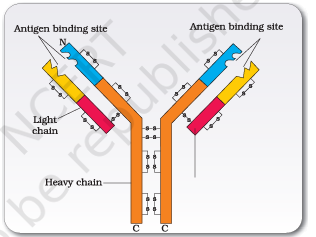
In the provided image, what structural element links the light chains to the heavy chains?
QUESTION 10 OF 20
According to the diagram and text, the antibody is designated as H₂L₂. If colostrum contains abundant IgA, what is the fundamental structural composition of an individual IgA monomer?
QUESTION 11 OF 20
Which feature is NOT related to the humoral immune response?
QUESTION 12 OF 20
Which specific immune capability allows the body to distinguish between 'self' and 'nonself' tissue, primarily guiding graft rejection?
QUESTION 13 OF 20
Match the terms associated with transplantation (Column I) with their descriptions (Column II).
| Column I | Column II |
|---|---|
| 1. Graft | P. Pre-requisite test before surgery |
| 2. Tissue matching | Q. Transplanted organ from a donor |
| 3. Immuno-suppressants | R. Differentiated by the CMI |
| 4. 'Self' vs 'Non-self' | S. Drugs required for the patient's entire life |
QUESTION 14 OF 20
Which scenario is NOT a reason a graft might be rejected?
QUESTION 15 OF 20
QUESTION 16 OF 20
QUESTION 17 OF 20
Which of the following statements about vaccination are true?
Statement I: It is based on the 'memory' property of the immune system.
Statement II: It introduces preformed antibodies into the body to generate memory.
Statement III: It utilizes antigenic proteins of a pathogen or weakened pathogens.
QUESTION 18 OF 20
The primary reason a vaccinated individual survives an actual infection is because:
QUESTION 19 OF 20
In cases of snakebites, patients are given injections containing preformed antibodies against the venom. This is analogous to the treatment for which other condition mentioned in the text?
QUESTION 20 OF 20
What major advantage does Recombinant DNA technology offer for vaccines, as seen with Hepatitis B?
Test Complete!
Answer Review
1 Match the innate barrier to its functional description.
| Column I | Column II |
|---|---|
| 1. Skin | P. Non-specific defense present at birth |
| 2. Mucus | Q. Traps microbes entering the body |
| 3. Innate immunity | R. Main barrier preventing microorganism entry |
| 4. Gastrointestinal tract lining | S. Coated with epithelium and mucus |
Skin is the primary physical barrier preventing the entry of foreign microorganisms into the body. Mucus acts as a sticky trap for microbes entering respiratory, gastrointestinal, and urogenital tracts. Innate immunity is a non-specific defense mechanism present right from the time of birth.
According to NCERT, innate immunity consists of four main types of barriers: physical, physiological, cellular, and cytokine. Skin (1) forms the outermost structural physical block, making it the main barrier preventing entry (R). Mucus (2) is a thick secretion designed to trap microbes (Q). Innate immunity (3) is inherently defined as a non-specific type of defense that is present at birth (P). The lining of the gastrointestinal, respiratory, and urogenital tracts (4) consists of an epithelial layer coated with mucus (S). Matching these definitions directly points to option A.
- Option B → Incorrectly matches Skin (1) with P (present at birth). While skin is present at birth, its specific functional designation under innate barriers is as a physical structural barrier (R).
- Option C → Incorrectly associates Mucus (2) with S (coated with epithelium). It is the tract lining that is coated with mucus, not mucus itself.
- Option D → Incorrectly pairs Skin (1) with Q (traps microbes). Skin blocks entry mechanically; it does not trap them in a fluid or gel-like state.
Used: Elimination
Application: Identifying a single absolute anchor pair like "3-P" (Innate immunity is a non-specific defense present at birth) or "1-R" immediately eliminates options B, C, and D.
Final Logic: Match the unique structural roles of physical barriers to unlock the option layout cleanly.
Mucus = Microbe Trap (Quick Catch).
2 Which of the following body fluids is NOT cited as a physiological barrier to microbial growth?
Acid, tears, and saliva contain chemical environments or enzymes that directly restrict microbial replication. These three fluids form the classical core of physiological barriers in innate defense. Lymph functions as a circulatory fluid holding white blood cells, acting as a structural/cellular site rather than a fluid barrier preventing growth.
Physiological barriers involve chemical attributes of body secretions that prevent microbial growth. Stomach acid provides an extremely low pH environment that kills swallowed pathogens. Saliva and tears both contain lysozyme, an antibacterial enzyme that degrades bacterial cell walls. Lymph, however, serves as a fluid medium within the lymphatic system for tissue drainage and immune cell trafficking (cellular component), not a fluid chemical barrier meant to stop microbial growth dynamically at a surface level.
- Option A → Saliva in the mouth is a physiological barrier because it contains lysozymes that actively breakdown bacterial invaders.
- Option B → Tears from the eyes are physiological barriers that wash away particles and contain anti-microbial enzymes.
- Option D → Acid in the stomach is a premier chemical/physiological barrier that destroys the majority of ingested pathogens via ultra-low pH.
Used: Odd One Out
Application: Saliva, tears, and stomach acid are external or luminal fluid secretions containing hostile chemical environments. Lymph is an internal tissue fluid circulating within a specific vascular network.
Final Logic: Identify the internal circulatory fluid among external or surface-protective chemical secretions.
Physiologic = PH / Fluid secretions (Acid, Tears, Saliva → ATS). Lymph does not belong.
3 Consider the cellular barriers in our body:
Statement I: Macrophages in tissues can phagocytose and destroy microbes.
Statement II: Natural killer cells are a type of lymphocyte involved in cellular barriers.
Statement III: Neutrophils (PMNLs) act as cytokine barriers.
Which statement(s) is/are correct?
Macrophages are tissue-resident phagocytic cells that engulf foreign microbes. Natural Killer (NK) cells are non-phagocytic granular lymphocytes that classify under cellular barriers. Neutrophils (PMNL-leukocytes) are cellular barriers, not cytokine barriers.
Statement I is entirely accurate because macrophages are specialized phagocytes in tissues that clear cellular debris and pathogenetic elements. Statement II is accurate because Natural Killer (NK) cells are a distinctive subclass of lymphocytes circulating in blood that provide cellular destruction of infected cells. Statement III is false because Polymorphonuclear Leukocytes (PMNL-Neutrophils) are cellular barriers, whereas cytokine barriers specifically consist of soluble signaling proteins like interferons. Therefore, only statements I and II are correct.
- Option A → Incorrectly excludes Statement II, which is factually true since NK cells are cellular components of innate immunity.
- Option B → Includes Statement III, which misses the crucial distinction between cellular elements (PMNL) and molecular signaling elements (cytokines).
- Option C → Includes Statement III, which misclassifies PMNL cells into the cytokine barrier group instead of cellular.
Used: Extreme Word Filter / Category Verification
Application: Check the functional category assignment. Neutrophils are cells; therefore, assigning them to "cytokine barriers" breaks clear biological definitions.
Final Logic: Isolate and remove Statement III because cells belong to cellular barriers, leaving option D as the clean choice.
Interferons = Cytokines.
4 What triggers the secretion of interferons, and what is their specific target audience in the body?
Interferons are specialized anti-viral proteins released uniquely by cells already taken over by a virus. They signal neighboring, uninfected healthy cells to synthesize antiviral proteins. They act specifically as a cytokine barrier to limit the geographical spread of viral replication.
Per NCERT guidelines, virus-infected cells secrete proteins called interferons. These proteins do not directly save the dying host cell that created them. Instead, they act as an alert system, diffusing out to look for surrounding non-infected healthy cells and protecting them from further viral infection by triggering mechanisms that disrupt viral transcription and replication.
- Option A → Inverts the dynamic; healthy cells do not manufacture interferons out of nowhere to attack already compromised cells.
- Option B → Correctly defines the source and destination of the signal.
- Option C → Erroneously associates interferons with bacterial targets and standard T-cell cell-mediated pathways.
- Option D → Erroneously claims B-cells produce interferons to coat viruses (B-cells produce antibodies to coat antigens).
Used: Contextual/Tonal Matching
Application: Look for the specific source-to-sink relationship described in the definition of cytokine barriers.
Final Logic: The cell that is already "interfered with" (infected) releases the signal to save its uninfected neighbors.
Interferon = InfecTED cell warns the ProTECTED cell.
5 Arrange the steps of the acquired immune response based on memory:
1. Low-intensity primary response occurs.
2. The body encounters a pathogen for the first time.
3. Subsequent encounter with the identical pathogen occurs.
4. A highly intensified secondary response is elicited.
The immune system must encounter a foreign pathogen first before any response can happen. The initial contact results in a delayed, low-intensity primary immune reaction. The system saves structural memory profiles, ensuring any later encounter sparks a massive secondary response.
The chronological timeline of an acquired immune cycle relies strictly on exposure events. First, the body encounters a pathogen for the initial time (2). This direct event causes a slow, low-intensity primary immune response (1). Through memory cells generated during this phase, a subsequent encounter with the identical pathogen (3) causes the immune system to immediately recognize it, eliciting a highly intensified secondary or anamnestic response (4). This gives the sequence 2 →1 →3 →4.
- Option A → Starts with the primary response occurring before the body actually encounters the pathogen, which is biologically impossible.
- Option C → Claims a subsequent encounter (3) happens before the primary response (1) has finished developing.
- Option D → Places the secondary response phase at the very beginning of the timeline without prior baseline exposure.
Used: Elimination
Application: A primary response cannot exist without a first encounter, meaning step 2 must strictly precede step 1.
Final Logic: Only option B puts step 2 as the absolute initiator followed directly by step 1.
Encounter 1 →Response 1 →Encounter 2 →Response 2.
6 Which characteristic is NOT true regarding the anamnestic immune response?
An anamnestic response is a synonym for the secondary immune response. It requires a prior exposure history to build its rapid and massive reaction. The first encounter only elicits a low-intensity primary response, never an anamnestic response.
The term "anamnestic response" specifically defines the secondary immune response. Because the body has already cataloged memory of the target antigen during the primary encounter, any subsequent infection results in a fast, highly intensified response (B) built upon that cellular memory (C). Both responses are fundamentally carried out by specialized B and T lymphocytes (D). Statement A is incorrect because the first encounter yields a weak, slow primary response, not an anamnestic one.
- Option B → This is true; secondary responses are highly intensified due to clonal expansion of memory populations.
- Option C → This is true; memory profiles from the primary infection act as the foundation for the secondary reaction.
- Option D → This is true; both B and T cells form the functional lymphocytic backbone of acquired immunity.
Used: Contextual/Tonal Matching
Application: The prefix "an-" combined with the concept of memory indicates recall. A system cannot recall information during its absolute first exposure.
Final Logic: Identify the statement that incorrectly links a memory-dependent term (anamnestic) to a zero-memory state (first encounter).
Anamnestic = Accelerated Secondary Response. (Never the 1st time!)
7 The army of proteins produced by B-lymphocytes in response to pathogens is known as:
B-lymphocytes synthesize specialized protective proteins called antibodies. These antibodies circulate in body fluids to target and neutralize specific foreign elements. Antigens are the targets, interferons are cytokines, and macrophages are phagocytic cells.
When pathogens gain entry into body fluids, B-lymphocytes are stimulated to produce an army of protective proteins into the bloodstream to fight them. These specific defensive proteins are called antibodies. Antigens are the foreign molecules that trigger this process. Interferons are innate cytokine proteins, and macrophages are large phagocytic white blood cells.
- Option A → Antigens are the chemical compounds found on pathogens that stimulate an immune response, not the defensive proteins produced by the host.
- Option B → Interferons are cytokine barrier proteins released by virus-infected cells, not blood-borne proteins from B-cells.
- Option D → Macrophages are whole phagocytic cells, not individual proteins.
Used: Substitution
Application: Substitute the core definitions of each option into the phrase "army of proteins produced by B-lymphocytes".
Final Logic: B-cells are the dedicated factory for circulating antibodies.
B-cells = Bodyguards producing Antibodies.
8 Place the sequence of events of cellular cooperation in correct order:
1. B-cells secrete an army of antibodies.
2. T-cells recognize the presence of the pathogen.
3. T-cells support B-cells in their function.
4. Antibodies neutralize the pathogen in the blood.
T-lymphocytes do not directly produce antibodies; they act as helper coordinators. T-cells must first recognize an antigen before they can offer help. Helper signaling activates B-cells to secrete antibodies, leading to downstream neutralization.
The sequence begins when T-cells identify the presence of a foreign antigen/pathogen (2). Once activated, these T-lymphocytes provide help and support to B-lymphocytes (3). Boosted by this cellular cooperation, B-cells proliferate and secrete an army of antibodies into circulation (1). Finally, these free-floating antibodies bind to and neutralize the pathogen in the blood (4), yielding the sequence 2 →3 →1 →4.
- Option B → Places antibody secretion (1) at the absolute beginning before any T-cell helper recognition or signaling takes place.
- Option C → Suggests T-cells support B-cells (3) before the T-cells have actually recognized the presence of the pathogen (2).
- Option D → Places antibody production (1) before T-cells provide their required helper support function (3).
Used: Elimination
Application: Neutralization (4) is the final outcome of antibody production, so step 4 must stand at the very end of the sequence. This highlights options A and C.
Final Logic: Since T-cells must recognize a pathogen (2) before supporting others (3), option A is the only logically sound arrangement.
T-cell sees →T-cell helps →B-cell makes →Antibody takes down.
9 In the provided image, what structural element links the light chains to the heavy chains?
An antibody molecule is a quaternary protein structure composed of four polypeptide chains. The structure features two small light chains and two larger heavy chains. These separate chains are cross-linked and held together firmly by covalent disulfide bonds.
According to the definitive structural model of an antibody depicted in NCERT, each antibody molecule consists of four peptide chains: two small light chains and two longer heavy chains (H₂L₂). These separate protein filaments are cross-linked and held together securely by covalent disulfide bonds (-S-S-). Hydrogen bonds stabilize secondary folding, peptide bonds hold individual amino acids together within a single chain, and phosphodiester bonds form the structural backbone of nucleic acids (DNA/RNA).
- Option A → Hydrogen bonds stabilize secondary shapes like alpha-helices or beta-sheets but are not the primary covalent cross-links between heavy and light chains.
- Option C → Peptide bonds link sequential amino acid residues within individual polypeptide chains, not across distinct chains.
- Option D → Phosphodiester bonds belong strictly to nucleic acid biology (linking nucleotides), not protein structures.
Used: Dimensional/Unit Analysis / Category Verification
Application: Assess the chemical bonds that lock separate tertiary protein blocks together into a quaternary unit.
Final Logic: Disulfide bridges are the classic covalent bonds that cross-link separate peptide chains in an antibody structure.
Antibody chains are Secured by diSulfide bonds (-S-S-).
10 According to the diagram and text, the antibody is designated as H₂L₂. If colostrum contains abundant IgA, what is the fundamental structural composition of an individual IgA monomer?
Every standard antibody building block (monomer) has the identical core formula: H₂L₂. This formula represents exactly two heavy (H) chains and two light (L) chains. Even when antibodies form complexes (like dimeric IgA), each individual monomer subunit retains this H₂L₂ layout.
The question asks for the fundamental composition of an individual antibody monomer. As stated in NCERT text, every single antibody unit is structurally designated as H₂L₂. This structural formula translates directly to having two heavy peptide chains (H₂) combined with two light peptide chains L₂. While secretory IgA acts as a dimer (two units joined together) in body secretions like colostrum, each component monomer unit is built from the standard two heavy and two light chain arrangement.
- Option A → One heavy and one light chain would be designated as HL, which forms an incomplete, non-functional half-molecule.
- Option C → Four heavy chains would completely lack the variable and constant regions provided by light chains.
- Option D → Four light chains would lack the heavy constant structures that determine the antibody's class and effector functions.
Used: Option Grouping / Literal Translation
Application: Directly decode the formula H₂L₂.provided in the text.
Final Logic: The abbreviation H₂L₂.literally means two heavy (H) and two light (L) chains.
H₂L₂= 2 Heavy + 2 Light. This is the universal blueprint for all antibody monomers.
11 Which feature is NOT related to the humoral immune response?
Humoral immunity is mediated by antibodies floating freely in body fluids (humors) like blood and lymph. These antibodies are specialized proteins manufactured specifically by B-lymphocytes. Direct tissue destruction by T-cells is the defining feature of cell-mediated immunity (CMI), not humoral immunity.
The term "humoral" refers to the humors or fluids of the body, specifically blood plasma and lymph. Because antibodies produced by B-lymphocytes (D) are shed into and circulate throughout these fluids (A), this branch of acquired immunity (C) is called the humoral immune response. Option B describes the cell-mediated immune response (CMI), where specialized T-lymphocytes directly interact with and destroy target cells or compromised tissues, making it unrelated to humoral mechanics.
- Option A → This is a true characteristic; antibodies must travel through blood circulation to reach infection sites.
- Option C → This is a true statement; acquired immunity splits cleanly into two arms: humoral (antibody-mediated) and cell-mediated.
- Option D → This is a true characteristic; B-cells are the structural factories behind humoral antibody production.
Used: Elimination / Category Verification
Application: Group options A, C, and D together under the "B-cell/Antibody/Fluid" functional category. Option B stands out as it introduces T-cell tissue destruction.
Final Logic: Identify the statement that describes cell-mediated immunity instead of antibody-driven fluid immunity.
Cell-Mediated = T-cells (Tissue interaction).
12 Which specific immune capability allows the body to distinguish between 'self' and 'nonself' tissue, primarily guiding graft rejection?
Acquired immunity has the sophisticated ability to distinguish between the body's own cells and foreign invaders. Cell-mediated immunity (CMI) is the primary system that identifies foreign tissue surfaces. This T-cell-driven identification is the direct cause of the rejection of transplanted organs (grafts).
The body is capable of differentiating between its own healthy structural tissue ("self") and foreign biological tissue ("nonself"). When an allograft or foreign organ is transplanted, the host's cell-mediated immune response (CMI), driven by T-lymphocytes, recognizes the non-matching foreign human leukocyte antigens (HLA) on the graft. This triggers an aggressive cellular attack that destroys the transplant. Humoral systems, innate fluids, and interferons do not coordinate this specific tissue-rejection mechanism.
- Option A → Innate secretions offer non-specific surface blocks against broad microbes, not precise tissue-matching recognition.
- Option B → Humoral memory B-cells produce fluid-borne antibodies against specific foreign proteins, but they do not primary-mediate cellular graft rejection.
- Option D → Interferons are broad, non-specific cytokine signaling proteins intended purely for anti-viral defense.
Used: Contextual/Tonal Matching
Application: Match the biological phenomenon of "graft/tissue rejection" to its textbook mediator listed in the acquired immunity subtopics.
Final Logic: NCERT explicitly pairs the body's ability to distinguish 'self' from 'nonself' during organ transplantation with cell-mediated immunity.
Cell-Mediated = Checks Matching tissues →Rejecting Compromised grafts.
13 Match the terms associated with transplantation (Column I) with their descriptions (Column II).
| Column I | Column II |
|---|---|
| 1. Graft | P. Pre-requisite test before surgery |
| 2. Tissue matching | Q. Transplanted organ from a donor |
| 3. Immuno-suppressants | R. Differentiated by the CMI |
| 4. 'Self' vs 'Non-self' | S. Drugs required for the patient's entire life |
A graft is any living organ or tissue that is harvested from a donor and transplanted into a recipient. Tissue matching and blood group matching are critical diagnostic prerequisites before scheduling a transplant. Recipients must take immunosuppressive medications for the rest of their lives to prevent organ rejection.
By analyzing the essential clinical steps of organ transplantation: a graft (1) represents the actual transplanted organ (Q). Tissue matching (2) is the vital diagnostic laboratory screening required before surgery can proceed (P). Immuno-suppressants (3) are pharmaceuticals that damp down host immune activity, requiring lifelong compliance by the patient (S). The fundamental biological paradigm of distinguishing 'self' vs 'nonself' (4) is managed directly by cell-mediated immunity (R). This perfectly assembles option C.
- Option A → Mistakenly links graft (1) to lifelong drug administration (S) and tissue matching (2) to CMI recognition (R).
- Option B → Inverts the definitions of 1 and 2, claiming a graft is a prerequisite test and tissue matching is an organ.
- Option D → Incorrectly matches immuno-suppressants (3) with a prerequisite test (P) and tissue matching (2) with drugs (S).
Used: Elimination
Application: Connect the most distinct and absolute pairing, such as "3-S" (immuno-suppressants are drugs taken for a patient's entire life). This single anchor instantly eliminates choices A, B, and D.
Final Logic: Isolate the choice that maintains correct logical matches for diagnostic tests and therapeutic medications.
Immunosuppressants = Interminable life-long drugs (S).
14 Which scenario is NOT a reason a graft might be rejected?
Graft rejection is driven by cell-mediated responses identifying non-self components. Omitting blood matching or stopping immunosuppressive drugs will accelerate tissue rejection. The humoral system does not use interferons (which are anti-viral cytokines) to destroy a physical organ graft.
Options A, B, and C describe true risk factors for graft failure: CMI attacks foreign tissue structures (A), mismatching blood profiles causes immediate vascular rejection (B), and stopping immunosuppressant drugs leaves the immune system free to attack the foreign organ (C). Option D contains a biological error; the humoral response produces fluid-borne antibodies, not interferons. Furthermore, interferons are non-specific antiviral signaling proteins that play no role in organizing the destruction of an allograft.
- Option A → This is a valid cause of rejection; CMI is the primary pathway that targets non-self tissue transplants.
- Option B → This is a valid cause of rejection; mismatched blood types trigger acute immunological rejection.
- Option C → This is a valid cause of rejection; stopping medication allows host immune cells to recover and attack the graft.
Used: Extreme Word Filter / Fact-Checking
Application: Identify the option that combines two unrelated immune concepts (humoral immunity and interferon production) to describe tissue rejection.
Final Logic: Since interferons are antiviral tools rather than agents of graft rejection, statement D stands out as factually false.
Interferons interfere with viruses only. They do not orchestrate transplant rejection.
15
Active immunity requires the host's own body to recognize an antigen and manufacture its own antibodies. This biological process requires clonal expansion and differentiation, creating an inherent delay. The provided text explicitly notes this slow timeline as a comparative drawback.
The question asks for a drawback of active immunity based directly on the provided passage. The text explicitly states: "Active immunity is slow and takes time to give its full effective response." This delay occurs because the host's immune system must process the antigen, activate specific lymphocytes, and scale up antibody production from scratch. Passive immunity avoids this delay by delivering ready-made antibodies for immediate protection.
- Option A → The text notes exposure can happen via "living or dead microbes," meaning it is not limited strictly to dead pathogenetic material.
- Option C → Relying on pre-made antibodies is the defining characteristic of passive immunity, not active immunity.
- Option D → Active immunity can be deliberately induced through immunization programs using weakened pathogens.
Used: Contextual/Tonal Matching / Direct Text Retrieval
Application: Match the question's premise directly to the explicit sentence within the provided reading passage.
Final Logic: The text directly identifies a slow speed and delayed response timeline as the primary drawback of active immunity.
Passive = Preformed antibodies given (Prompt/Immediate).
16
Used: Substitution / Category Verification
Application: Evaluate which choice involves a patient receiving preformed antibodies from an outside source rather than manufacturing them internally.
Final Logic: Maternal antibodies passing through the placenta represent ready-made protection, matching the definition of passive immunity.
Mom's antibodies (Milk/Colostrum or Placenta) = Pre-made protection (Passive).
17 Which of the following statements about vaccination are true?
Statement I: It is based on the 'memory' property of the immune system.
Statement II: It introduces preformed antibodies into the body to generate memory.
Statement III: It utilizes antigenic proteins of a pathogen or weakened pathogens.
Vaccination uses the immune system's property of acquired memory to protect against future infections. Vaccines present harmless antigenic proteins or weakened pathogens to the immune system. They do not introduce preformed antibodies; introducing preformed antibodies is a passive therapy that does not generate long-term memory cells.
Statement I is correct because vaccination relies on generating memory B and T-cell lines that remember the target antigen. Statement III is correct because vaccines use altered, non-pathogenic variants—such as inactivated or weakened pathogens—to safely trigger this primary response. Statement II is false because regular vaccines do not deliver preformed antibodies (which is passive immunization); instead, they deliver antigens so the body can actively generate its own antibodies and memory cells. Thus, only statements I and III are true.
- Option A → Includes Statement II, which incorrectly states that regular vaccines introduce preformed antibodies to generate memory.
- Option C → Includes Statement II and excludes Statement I, missing the fundamental memory-based principle of active immunization.
- Option D → Includes Statement II, failing to separate active vaccine mechanics (introducing antigens) from passive emergency treatments (introducing preformed antibodies).
Used: Extreme Word Filter / Error Isolate
Application: Fact-check Statement II. Preformed antibodies provide immediate passive protection, but they do not create long-term cellular memory because they skip the active primary expansion phase.
Final Logic: Eliminating Statement II removes options A, C, and D, leaving option B as the correct choice.
Vaccine = Variant Antigens (Weakened/Protein) →Creates Memory cells. No preformed antibodies inside standard vaccines.
18 The primary reason a vaccinated individual survives an actual infection is because:
Vaccines prompt the immune system to produce long-lived memory B and T-lymphocytes. When a wild pathogen attacks later, these memory cells bypass the slow primary response phase. They recognize the antigen instantly, launching a rapid secondary response that clears the infection.
When a vaccinated person is exposed to an actual live pathogen, their immune system does not have to start from scratch. The vaccine has already generated a population of memory B and T-lymphocytes. These memory cells instantly recognize the foreign antigen and rapidly multiply. They launch a massive secondary immune response, producing a large wave of antibodies that overwhelm and neutralize the pathogen before it can cause severe illness.
- Option A → Vaccines are biological components that do not continuously secrete chemical acids inside tissues.
- Option C → Viruses cannot be biologically converted into bacteria; they are entirely distinct biological entities.
- Option D → Vaccines do not alter the host's genomic DNA, nor do they modify non-specific innate barriers like the skin or stomach acid.
Used: Substitution / Scientific Plausibility
Application: Evaluate the biological accuracy of each option. Options A, C, and D describe scientifically inaccurate mechanisms.
Final Logic: Choose the option that correctly describes the lymphocyte-driven memory response characteristic of acquired immunity.
Vaccine →Memory Cells →Massive Secondary Strike.
19 In cases of snakebites, patients are given injections containing preformed antibodies against the venom. This is analogous to the treatment for which other condition mentioned in the text?
Emergency situations like snakebites or tetanus exposure require immediate protection. There is no time to wait for the body to generate its own active immune response. Both conditions are treated with passive immunization using fast-acting, preformed antibodies (antitoxins).
If a person is infected with a dangerous pathogen where an immediate immune response is required—such as with Clostridium tetani (tetanus)—the patient needs direct protection. Waiting for an active immune response could be fatal. The medical solution is passive immunization: directly injecting preformed antibodies or antitoxins against the tetanus toxin. This is directly analogous to using anti-venom injections for snakebites, which also deliver preformed antibodies to neutralize toxins immediately.
- Option A → The common cold is a self-limiting viral infection managed through symptomatic relief, not passive antibody therapy.
- Option B → Typhoid is a bacterial infection treated primarily with targeted antibiotics, and prevented via active vaccines.
- Option D → Ringworm is a superficial fungal infection treated with topical or systemic antifungal medications.
Used: Contextual/Tonal Matching / Analogy Link
Application: Connect the concept of "emergency passive immunization with preformed antibodies" to the classic examples provided in the NCERT text.
Final Logic: Snakebites and tetanus infections are grouped together in the text as emergencies that require preformed antibodies.
Toxins & Tangs (Snakebites) need immediate help →Give Tetanus antitoxin / Anti-venom (Passive).
20 What major advantage does Recombinant DNA technology offer for vaccines, as seen with Hepatitis B?
Recombinant DNA technology allows scientists to produce specific pathogen proteins in host organisms like yeast or bacteria. This approach enables large-scale manufacturing of pure antigenic proteins in bioreactors. The primary benefit is increased production capacity, making safe vaccines more widely available.
Recombinant DNA technology allows genes encoding specific antigenic proteins of a pathogen to be isolated and expressed in alternative hosts like yeast or bacteria. This approach enables large-scale industrial production of pure viral proteins within controlled bioreactors. The major advantage is the ability to mass-produce these antigenic components efficiently, leading to increased vaccine availability globally, as demonstrated by the recombinant Hepatitis B vaccine produced in yeast.
- Option A → Recombinant vaccines are still typically administered via standard needle injections; the technology changes how the vaccine is manufactured, not how it is delivered.
- Option C → The Hepatitis B vaccine triggers active immunity by presenting antigens to the host; it does not provide passive protection.
- Option D → Recombinant vaccines work by stimulating the host's immune system to produce its own memory cells, not by replacing them.
Used: Contextual/Tonal Matching
Application: Look for the specific industrial and clinical benefits of recombinant protein production highlighted in the text.
Final Logic: Recombinant technology uses expression systems like yeast to enable the large-scale production and widespread availability of vaccines.
Recombinant DNA = Rapid, Mass Production in Yeast (Bioreactors →Hepatitis B).