
CUET UG Biology Booster Test 3-Immunity and Vaccination Principles
📌 Answers are locked once submitted — results and explanations appear at the end.
QUESTION 1 OF 20
Trace the sequence of innate physical defense a dust-borne microbe must face as it is inhaled:
1. Microbe contacts the mucus coating of the respiratory epithelium.
2. Microbe enters the nasal/respiratory passage.
3. Microbe is trapped by the sticky mucosal layer.
4. Microbe attempts to bypass the primary physical barrier.
QUESTION 2 OF 20
Analyze the physiological barriers and select the correct statements:
Statement I: The acidic pH of the stomach provides a hostile environment for ingested pathogens.
Statement II: Tears and saliva contain components that prevent microbial growth.
Statement III: Physiological barriers are highly specific to individual viral strains.
QUESTION 3 OF 20
Match the cell type (Column I) with its specific location/category in innate immunity (Column II).
| Column I | Column II |
|---|---|
| 1. PMNL-neutrophils | P. Phagocytic cells primarily residing in tissues |
| 2. Macrophages | Q. Poly-morphonuclear leukocytes in blood |
| 3. Monocytes | R. Type of lymphocyte functioning in blood |
| 4. Natural killer cells | S. Leukocyte that circulates and can phagocytose in blood |
QUESTION 4 OF 20
Which of the following statements analytically is NOT true regarding interferons?
QUESTION 5 OF 20
Why does the evolutionary development of acquired immunity depend inherently on memory?
QUESTION 6 OF 20
Which statement does NOT correctly distinguish a primary response from a secondary (anamnestic) response?
QUESTION 7 OF 20
QUESTION 8 OF 20
QUESTION 9 OF 20
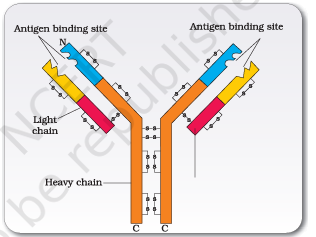
In the provided antibody structure diagram, the variable regions containing the antigen-binding sites are located near which marked end of the peptide chains?
QUESTION 10 OF 20
Given the H₂L₂ structure depicted, what physiological response does this entire molecule primarily facilitate when released into the bloodstream?
QUESTION 11 OF 20
Outline the sequence of a typical humoral immune response:
1. Antibodies are released into the blood plasma.
2. B-lymphocytes encounter a specific pathogen.
3. Antibodies bind to and neutralize the pathogen.
4. B-lymphocytes are stimulated (with T-cell help) to produce proteins.
QUESTION 12 OF 20
Which is NOT an analytical justification for why CMI is critical for graft rejection?
QUESTION 13 OF 20
Regarding organ transplantation, which of the following statements reflect the challenges faced?
Statement I: Grafts from any animal primate can be easily accepted if blood types match.
Statement II: Tissue and blood group matching are fundamental pre-requisites to prevent immediate rejection.
Statement III: The patient's cell-mediated immunity remains a lifelong threat to the graft.
QUESTION 14 OF 20
A patient requires immuno-suppressants post-transplant for their entire life. Which specific cellular component is primarily being suppressed?
QUESTION 15 OF 20
Which of the following scenarios does NOT describe the induction of active immunity?
QUESTION 16 OF 20
Match the context of immunity (Column I) with the biological medium (Column II).
| Column I | Column II |
|---|---|
| 1. Infant's gut protection | P. Preformed antitoxin injection |
| 2. Foetal protection in utero | Q. Colostrum rich in IgA |
| 3. Active humoral response | R. Placental transfer of antibodies |
| 4. Passive tetanus response | S. Blood plasma antibody production |
QUESTION 17 OF 20
At a molecular level, why does introducing an inactivated pathogen effectively create immunity without causing the full disease?
QUESTION 18 OF 20
How do memory B and T-cells specifically alter the dynamic of an infection timeline?
QUESTION 19 OF 20
From an immunological standpoint, why is active vaccination insufficient for a person suffering from an acute tetanus infection?
QUESTION 20 OF 20
The use of Recombinant DNA technology in bacteria or yeast to produce vaccines represents a shift towards:
Test Complete!
Answer Review
1 Trace the sequence of innate physical defense a dust-borne microbe must face as it is inhaled:
1. Microbe contacts the mucus coating of the respiratory epithelium.
2. Microbe enters the nasal/respiratory passage.
3. Microbe is trapped by the sticky mucosal layer.
4. Microbe attempts to bypass the primary physical barrier.
The microbe first encounters the external boundaries as it attempts to breach the host body. It enters the anatomical respiratory tract passages from the outside environment. It finally impacts the respiratory lining and becomes immobilized within the sticky matrix.
The chronological journey of an inhaled microbe through our innate physical boundaries follows a logical path. First, the microbe attempts to bypass the body's primary physical barrier system from the outside environment (4). To do this via inhalation, it enters the nasal cavity and respiratory passages (2). Once inside these physiological conduits, it makes direct physical contact with the fluid mucus coating lining the respiratory epithelium (1). Finally, the sticky physical properties of this mucosal secretion entrap the pathogen (3), preventing it from penetrating deeper into the lungs. This creates the sequential order: 4 →2 →1 →3.
- Option A → Places entry into the respiratory passage (2) before the microbe has even attempted to bypass the primary physical barrier system (4).
- Option C → Suggests the microbe makes functional contact with internal mucus layers (1) before it has even entered the nasal or respiratory passage (2).
- Option D → Claims that contact with the mucus coating (1) happens prior to the microbe passing into the respiratory tract tunnels (2).
Used: Elimination
Application: Trapping the microbe (3) must inherently serve as the absolute final step of this structural filtration sequence. This leaves only options A and B. Because attempting to breach the body's boundaries (4) initiates the narrative before actual structural entry (2), option B is eliminated.
Final Logic: The pathogen must approach the barrier boundary from the outside before it can pass through the tract and get trapped by the mucus.
Attempt entry →Passage entry →Contact mucus →Trapped (APCT).
2 Analyze the physiological barriers and select the correct statements:
Statement I: The acidic pH of the stomach provides a hostile environment for ingested pathogens.
Statement II: Tears and saliva contain components that prevent microbial growth.
Statement III: Physiological barriers are highly specific to individual viral strains.
Stomach acid, tears, and saliva use low pH and protective enzymes to destroy microbes non-specifically. These components belong to innate immunity, meaning they lack memory and strain specificity. Statement III incorrectly claims these non-specific barriers target individual viral strains.
Statement I is entirely correct; the highly concentrated hydrochloric acid in the stomach creates a low pH environment that denatures proteins and destroys ingested pathogens. Statement II is correct because tears and saliva contain lysozyme, an antibacterial enzyme that actively prevents microbial proliferation. Statement III is false because physiological barriers belong to innate immunity, which is characteristically non-specific. They deploy broad chemical and enzymatic defenses that act the same way against all foreign microbes, regardless of the specific viral or bacterial strain. Therefore, only statements I and II are correct.
- Option A → Includes Statement III and omits the valid explanation of enzymatic protection found in Statement II.
- Option B → Includes Statement III, which mischaracterizes an innate defense mechanism as having the narrow specificity unique to acquired immunity.
- Option D → Fails to filter out Statement III, ignoring the fact that innate physiological defenses are non-specific.
Used: Extreme Word Filter
Application: Scan for terms that cross category definitions. The phrasing "highly specific to individual viral strains" points exclusively to acquired immunity, making it completely incompatible with innate physiological barriers.
Final Logic: Isolate and eliminate Statement III due to this category mismatch, leaving option C as the correct choice.
Innate = Indiscriminant (Non-specific). Acid and lysozymes dissolve everything broadly.
3 Match the cell type (Column I) with its specific location/category in innate immunity (Column II).
| Column I | Column II |
|---|---|
| 1. PMNL-neutrophils | P. Phagocytic cells primarily residing in tissues |
| 2. Macrophages | Q. Poly-morphonuclear leukocytes in blood |
| 3. Monocytes | R. Type of lymphocyte functioning in blood |
| 4. Natural killer cells | S. Leukocyte that circulates and can phagocytose in blood |
PMNL stands for polymorphonuclear leukocytes, which are neutrophils circulating in the bloodstream. Macrophages are large phagocytic cells that leave the blood to reside long-term within tissues. Natural Killer (NK) cells are specialized non-phagocytic lymphocytes that destroy infected host cells.
Matching each cellular defense element to its exact biological definition or location reveals that PMNL-neutrophils (1) match with Q, as PMNL directly stands for Polymorphonuclear Leukocytes found in blood. Macrophages (2) are large phagocytes that differentiate and reside primarily in tissues (P) to clear cellular debris and microbes. Monocytes (3) are agranular leukocytes that circulate in the blood (S), where they perform phagocytosis before migrating into tissues. Natural Killer cells (4) are specialized large granular lymphocytes that circulate in the blood (R) to destroy infected or abnormal host cells. This aligns with option D.
- Option A → Incorrectly pairs macrophages (2) with circulating blood monocytes (S) and incorrectly links monocytes (3) with tissue-resident phagocytes (P).
- Option B → Incorrectly pairs PMNL-neutrophils (1) with tissue residency (P) and incorrectly places monocytes (3) as lymphocytes (R).
- Option C → Swaps the identities of neutrophils and monocytes, misidentifying the lymphocyte component.
Used: Elimination
Application: Use the structural acronym definition as your anchor point: PMNL directly translates to Polymorphonuclear Leukocytes (1-Q). This matches only options A and D. Next, isolate macrophages as tissue-resident cells (2-P) to eliminate option A.
Final Logic: Cross-referencing blood vs. tissue localization helps sort these immune cell categories.
Macrophages = Move into tissues permanently (P).
4 Which of the following statements analytically is NOT true regarding interferons?
Interferons are not produced ahead of time by healthy cells; they require an active viral infection to trigger their synthesis. They are produced and secreted exclusively by cells that have already been compromised by a virus. These proteins act as an emergency warning signal to protect neighboring, uninfected host cells.
Interferons are inducible proteins, meaning healthy cells do not produce them preemptively (A). They are synthesized and secreted exclusively by cells that have already been hijacked by a virus (C). Once released, these signaling molecules travel to neighboring uninfected cells, stimulating them to produce antiviral proteins that block viral replication. This localized protective signaling mechanism is why they are classified as cytokine barriers (B) whose main role is protecting non-infected tissue (D).
- Option B → This is a true statement; interferons are the classic textbook example of innate cytokine barriers.
- Option C → This is a true statement; host cells must be actively infected by a virus to trigger interferon gene expression.
- Option D → This is a true statement; interferons function primarily to create an antiviral state in neighboring uninfected cells.
Used: Contextual/Tonal Matching / Fact-Checking
Application: Evaluate the trigger mechanism for interferon production. Innate defenses do not create individual protein signals preemptively without an initial cellular disruption or infection event.
Final Logic: Identify the option that incorrectly describes healthy, uninfected cells as the primary source of interferon synthesis.
No virus = No interferon. A cell must be infected to produce an interferon.
5 Why does the evolutionary development of acquired immunity depend inherently on memory?
Acquired immunity relies on memory to track and remember specific pathogen encounters. This memory allows the immune system to launch a rapid, intense secondary response during re-exposure. This quick reaction eliminates the pathogen before it can cause disease, optimizing resource use.
The evolutionary advantage of adaptive or acquired immunity is its ability to remember specific pathogens. While the initial primary response is slow and resource-heavy, it generates long-lived memory B and T-lymphocytes. If the same pathogen attacks again, these memory cells enable the immune system to launch a rapid, highly intensified secondary (anamnestic) response (C). This quick response eliminates the threat before it can cause widespread disease, conserving biological energy and resources.
- Option A → Innate barriers like skin or stomach acid are non-specific and do not change or thicken based on immunological memory.
- Option B → The primary response is designed to defend the host, not cause lethal harm to it.
- Option C → Correctly highlights the resource-saving efficiency of the secondary memory response.
- Option D → Lymphocytic memory cells produce antibodies or coordinate defense; they do not engulf and digest pathogens like phagocytic macrophages.
Used: Contextual/Tonal Matching
Application: Look for the option that connects long-term memory with its evolutionary and functional benefits, such as rapid pathogen clearance during secondary exposure.
Final Logic: Option C uses accurate medical terminology (anamnestic response) to explain the biological purpose of immunological memory.
Memory = More Speed + Massive Anamnestic Protection.
6 Which statement does NOT correctly distinguish a primary response from a secondary (anamnestic) response?
Both primary and secondary immune responses rely on adaptive B and T-lymphocytes. PMNLs (neutrophils) are innate immune cells that provide non-specific defense, not memory responses. Statement C incorrectly claims that the secondary response relies entirely on these innate cells.
The primary and secondary immune responses are both branches of acquired immunity, meaning they are carried out by specialized B and T-lymphocytes. The primary response occurs during the first encounter and has a low intensity (A, B). The secondary response relies on memory cells from that first exposure to launch a faster, more intense reaction (D). Statement C is incorrect because secondary responses rely heavily on memory B and T-lymphocytes, not polymorphonuclear leukocytes (PMNLs), which are non-specific cells belonging to the innate immune barrier.
- Option A → This is a correct distinction; the primary response is weak, whereas the secondary response is highly amplified.
- Option B → This is a correct distinction; the primary response handles the initial exposure, while the secondary response manages later infections.
- Option D → This is a correct distinction; the speed and strength of the secondary response demonstrate that the immune system retains a memory of the antigen.
Used: Category Verification
Application: Check which cells belong to which immune branch. PMNLs are innate myeloid cells; they do not manage adaptive, memory-based secondary responses.
Final Logic: Identify the statement that incorrectly attributes a lymphocyte-driven adaptive process to innate granulocytes.
Primary & Secondary = Always Lymphocytes (B and T cells). Innate cells like PMNLs cannot form memory.
7
The provided text states that B-lymphocytes are responsible for producing antibodies. Antibodies are the specialized protective proteins released into the bloodstream. If a mutation blocks B-cell protein synthesis, the body will directly lose its ability to produce circulating antibodies.
The provided passage states: "The B-lymphocytes produce an army of proteins in response to pathogens into our blood... These proteins are called antibodies." If a genetic mutation prevents B-lymphocytes from synthesizing proteins, they cannot manufacture these protective molecules. As a result, the body will experience a severe shortage or complete absence of circulating antibodies in the blood (B). The text also notes that T-cells do not secrete antibodies, meaning they cannot step in to replace this function (A).
- Option A → The text explicitly states that "T-cells themselves do not secrete antibodies," meaning they cannot substitute for defective B-cells.
- Option C → Innate immunity relies on non-specific physical and chemical barriers, which operate independently of B-cell protein synthesis.
- Option D → Without antibody production, the primary response is severely weakened or lost entirely; it cannot transform into an intense secondary response.
Used: Direct Text Retrieval / Substitution
Application: Align the question's mutation scenario directly with the rules outlined in the text: B-cells are the sole source of antibody proteins, and T-cells cannot secrete them.
Final Logic: Blocking protein synthesis in B-cells directly shuts down antibody production, as they are the body's primary antibody factories.
B-cells missing protein synthesis = No antibodies in the blood.
8
T-cells do not produce or secrete antibody molecules directly. They function as key regulators and helper cells within the adaptive immune system. Their main role is to assist and activate B-cells, prompting them to secrete antibodies.
The functional relationship between these two cell types is explicitly defined at the end of the provided text: "The T-cells themselves do not secrete antibodies but help B cells to produce them." This means T-lymphocytes act as essential helper cells within humoral immunity, providing the cellular coordination and signaling needed to activate B-lymphocytes so they can scale up antibody production (C).
- Option A → B-lymphocytes manufacture whole antibody units (H₂L₂) containing both heavy and light chains; T-cells do not split production duties this way.
- Option B → The passage explicitly links the two cell lines, showing that T-cells actively support B-cell function rather than operating independently.
- Option D → Phagocytosis of debris and antigen-antibody complexes is performed by phagocytes like macrophages, not by T-lymphocytes.
Used: Direct Text Retrieval
Application: Read the final sentence of the provided passage to find the explicit definition of T-cell function.
Final Logic: The text directly states that the role of T-cells is to help B-cells produce their antibody proteins.
T-cells = Team helpers that assist B-cells.
9 In the provided antibody structure diagram, the variable regions containing the antigen-binding sites are located near which marked end of the peptide chains?
Polypeptide chains have a directional structure, starting at an amino (N) terminus and ending at a carboxyl (C) terminus. The antigen-binding sites are located at the tips of the antibody's "V" or "Y" shape. These highly variable tips correspond to the N-terminal ends of both the heavy and light chains.
Every polypeptide chain has chemical directionality, featuring an N-terminal (amino) end and a C-terminal (carboxyl) end. In an antibody structure, the antigen-binding sites are located at the tips of the "Y" shape. These tips contain the highly variable regions of both the heavy and light chains, which change shape to bind specific foreign antigens. These tips match the N-terminal ends of the protein chains. The C-terminal ends form the stable stem or constant region of the antibody structure.
- Option A → The C-terminal ends form the base or stem of the antibody structure, which acts as the constant region and does not bind antigens.
- Option C → Disulfide hinges are located in the middle of the antibody to provide structural flexibility, not to bind antigens.
- Option D → The heavy chain stems are constant regions that determine the antibody's class (such as IgG or IgA) and do not contain antigen-binding sites.
Used: Dimensional/Unit Analysis / Category Verification
Application: Apply structural protein biochemistry rules (N-terminus vs. C-terminus directionality) to the standard layout of an antibody molecule.
Final Logic: The variable, antigen-grabbing tips of an antibody are always located at the N-terminal ends of its polypeptide chains.
N-terminus = Neighborhood for Nabbing antigens.
10 Given the H₂L₂ structure depicted, what physiological response does this entire molecule primarily facilitate when released into the bloodstream?
An H₂L₂ composition is the characteristic structure of an antibody molecule. Free-floating antibodies are secreted into body fluids (humors) like blood plasma. The release and action of these blood-borne antibodies define the humoral immune response.
The structural formula H₂L₂ (two heavy and two light chains) defines a standard antibody monomer. When B-lymphocytes secrete these antibody molecules directly into the bloodstream, they circulate throughout the body's fluids to find and neutralize specific targets. Because this defense system relies on protective proteins dissolved in body fluids (humors), it is called the humoral immune response (B). Cell-mediated immunity relies on direct T-cell action rather than secreted antibodies (A).
- Option A → Cell-mediated immunity is driven directly by T-lymphocytes interacting with target cells, without secreting free-floating antibodies.
- Option C → Phagocytosis is an innate cellular defense performed by specialized white blood cells, not an antibody-mediated process.
- Option D → The interferon cascade is an innate antiviral signaling pathway triggered by cytokines, which operates independently of H₂L₂ antibodies.
Used: Substitution
Application: Identify the immune branch associated with the formula H₂L₂. Since H₂L₂ represents an antibody, its presence in body fluids points directly to humoral immunity.
Final Logic: The production and release of circulating antibodies is the defining feature of the humoral immune response.
Antibodies H₂L₂) float in the blood humors = Humoral Immune Response.
11 Outline the sequence of a typical humoral immune response:
1. Antibodies are released into the blood plasma.
2. B-lymphocytes encounter a specific pathogen.
3. Antibodies bind to and neutralize the pathogen.
4. B-lymphocytes are stimulated (with T-cell help) to produce proteins.
Humoral responses begin when clonal selection matches a specific antigen to a B-cell. Activation requires helper T-cell signaling to drive clonal expansion. Activated plasma cells secrete antibodies that bind and neutralize target pathogens.
The sequence outlines the steps of a humoral immune response. The process begins when naive B-lymphocytes encounter and bind a specific pathogen via their membrane-bound immunoglobulin receptors (2). This interaction, along with costimulatory signals from helper T-lymphocytes, stimulates the B-lymphocytes to proliferate and differentiate into plasma cells that synthesize specific defensive proteins (4). These proteins, known as antibodies, are then released into the blood plasma and lymph (1). Finally, these circulating antibodies track down the systemic pathogen, binding to its antigenic determinants to neutralize it or mark it for destruction (3). Thus, the correct operational sequence is 2, 4, 1, 3.
- Option A (4, 2, 1, 3) → Incorrect because B-lymphocytes cannot be stimulated to expand and differentiate (4) before they encounter their specific matching pathogen (2).
- Option B (2, 1, 4, 3) → Incorrect because it suggests antibodies are released into the plasma (1) before the B-lymphocytes are stimulated to synthesize those proteins (4).
- Option D (1, 2, 3, 4) → Incorrect because it reverses the process, placing antibody release (1) before antigen recognition (2) and cell activation (4).
Used: Elimination
Application: Identify the initial trigger and final outcome. The trigger must be antigen recognition (2), and the final step must be pathogen neutralization (3). This leaves options A and B.
Final Logic: Since protein synthesis (4) must occur before those proteins can be released into the blood (1), sequence 4 →1 is correct, confirming option C.
R-A-S-N: Recognize pathogen →Activate & synthesize →Secrete to plasma →Neutralize.
12 Which is NOT an analytical justification for why CMI is critical for graft rejection?
Graft rejection is primarily driven by cell-mediated immunity (CMI). T-lymphocytes use surface receptors to distinguish host tissue from non-self HLA complexes. Circulating antibodies are components of humoral immunity, not cell-mediated systems.
Option B is not a valid justification because it incorrectly attributes antibody production to cell-mediated immunity. Circulating antibodies are the effectors of the humoral immune response, which is driven by B-lymphocytes. In contrast, cell-mediated immunity (CMI) is mediated by T-lymphocytes (CD8⁺ cytotoxic T cells and CD4⁺ helper T cells) without the use of secreted antibodies. During graft rejection, T-lymphocytes recognize foreign human leukocyte antigens (HLAs) on the transplanted tissue, release perforins and granzymes, and recruit macrophages to destroy the graft cells directly. Therefore, statement B contains a fundamental biological error, making it the correct choice for this "NOT" question.
- Option A → Incorrect choice because it is a true justification. CMI depends on T-lymphocytes that use their T-cell receptors (TCRs) to scan and identify non-self major histocompatibility markers.
- Option C → Incorrect choice because it is a true clinical reality. Without lifelong immunosuppressive therapy, the host's CMI will continuously recognize and attack the foreign tissue.
- Option D → Incorrect choice because it is a true statement. The ability to distinguish self-antigens from non-self antigens is a core property of cell-mediated immunity.
Used: Odd One Out
Application: Check the definitions of immune components. Group terms by type: CMI, T-lymphocytes, and self/non-self recognition belong together. "Circulating antibodies" belongs to the humoral immunity category.
Final Logic: The reference to circulating antibodies in option B is an outlier in a question about cell-mediated immunity, identifying it as the incorrect statement.
CMI = Cells (T-cells) attacking cells. No free antibodies involved.
13 Regarding organ transplantation, which of the following statements reflect the challenges faced?
Statement I: Grafts from any animal primate can be easily accepted if blood types match.
Statement II: Tissue and blood group matching are fundamental pre-requisites to prevent immediate rejection.
Statement III: The patient's cell-mediated immunity remains a lifelong threat to the graft.
Xenografts from other primates face severe, immediate immunological rejection by the host. Clinical transplantation requires matching HLA tissue types and ABO blood groups. Host T-lymphocytes maintain immunogenic memory, requiring lifelong immunosuppressive care.
Statement I is false because organs from other animals or primates (xenografts) cannot be easily accepted by the human body; they trigger hyperacute rejection due to species-specific structural differences and pre-existing natural antibodies. Statement II is correct; matching tissue (HLA antigens) and blood groups (ABO compatibility) is necessary to minimize immediate rejection by the host's immune system. Statement III is also correct; even with a close match, the host's cell-mediated immunity (CMI) continues to recognize the graft as foreign, posing a lifelong threat of chronic rejection. As a result, patients must take immunosuppressive drugs for life. Thus, statements II and III are correct.
- Option A (I and II only) → Incorrect because it includes Statement I, which wrongly suggests that inter-species primate grafts are easily accepted by the human immune system.
- Option C (I and III only) → Incorrect because it includes the false Statement I and omits the true clinical requirement of tissue matching described in Statement II.
- Option D (I, II, and III) → Incorrect because it accepts Statement I as true, failing to recognize the severe immunological barriers to xenotransplantation.
Used: Extreme Word Filter
Application: Look for oversimplified or absolute words. Statement I claims that animal primate grafts are "easily accepted if blood types match," which ignores the complex realities of species barriers and tissue compatibility.
Final Logic: Eliminating Statement I removes options A, C, and D, leaving option B as the correct answer.
No animal shortcuts (No I); Match tissues and suppress T-cells for life (II & III).
14 A patient requires immuno-suppressants post-transplant for their entire life. Which specific cellular component is primarily being suppressed?
Acute and chronic tissue graft rejections are driven by cell-mediated immunity. T-lymphocytes orchestrate this response by recognizing foreign histocompatibility antigens. Immunosuppressive therapies specifically target T-cell proliferation and cytokine signaling.
The primary target of post-transplant immunosuppressive therapy (such as Cyclosporine A) is the T-lymphocyte population. Graft rejection is primarily a function of cell-mediated immunity (CMI). When an allograft is introduced, host helper T-cells (CD4⁺) identify foreign MHC markers on the graft and secrete Interleukin-2 (IL-2). This cytokine drives the clonal expansion of cytotoxic T-lymphocytes (CD8⁺), which directly attack and destroy the cells of the transplanted organ. Immunosuppressants act by blocking these T-cell activation and proliferation pathways, thereby protecting the graft from cell-mediated destruction.
- Option A → Incorrect because B-lymphocytes handle humoral antibody responses. While they play a minor role in late-stage chronic rejection, they are not the primary target of post-transplant immunosuppression.
- Option B → Incorrect because PMNL-neutrophils are non-specific innate phagocytes responsible for acute inflammation; suppressing them completely would leave the patient defenseless against common bacterial infections.
- Option D → Incorrect because Natural Killer cells are part of the innate immune system. While they monitor overall cell health, they do not drive the antigen-specific rejection process targeted by these therapies.
Used: Contextual/Tonal Matching
Application: Connect the clinical intervention (immunosuppression for graft survival) to the primary physiological cause of graft rejection (Cell-Mediated Immunity). CMI is mediated by T-lymphocytes.
Final Logic: Since T-lymphocytes drive cell-mediated graft rejection, they are the primary targets of post-transplant immunosuppressive therapy.
Transplant rejection = T-cell attack →Target T-cells for suppression.
15 Which of the following scenarios does NOT describe the induction of active immunity?
Active immunity develops when the host's own immune system produces antibodies in response to an antigen. Passive immunity provides immediate protection by introducing preformed antibodies from an external source. Emergency antitoxins provide immediate, short-term protection without generating immunological memory.
Option C describes passive immunity rather than active immunity. Active immunity occurs when a host's own immune system encounters an antigen and synthesizes its own antibodies, a process that takes time but generates long-lived memory cells. In contrast, passive immunity involves introducing preformed antibodies or antitoxins directly into the patient's body from an external source. After a venomous snakebite, the toxin acts too quickly for the host to mount an active response. Injecting a preformed antitoxin provides immediate neutralization of the venom, but it does not stimulate the host's lymphocytes or create immunological memory, making it a classic example of passive immunization.
- Option A → Incorrect choice because contracting a natural infection exposes the body to live pathogens, triggering an active immune response and memory cell production.
- Option B → Incorrect choice because vaccination introduces inactivated antigens to safely stimulate the host's immune system to produce its own antibodies and memory cells (artificial active immunity).
- Option D → Incorrect choice because it describes the defining mechanism of active immunity: the host's body manufacturing its own antibodies after exposure to an antigen.
Used: Odd One Out
Application: Compare the metabolic source of the antibodies. In options A, B, and D, the host's own body synthesizes the protective antibodies. In option C, the protective molecules are manufactured externally and injected preformed.
Final Logic: Option C is the only scenario describing passive delivery, identifying it as the correct answer for this negative question.
Active = Body works to make it. Passive = Preformed and passed in.
16 Match the context of immunity (Column I) with the biological medium (Column II).
| Column I | Column II |
|---|---|
| 1. Infant's gut protection | P. Preformed antitoxin injection |
| 2. Foetal protection in utero | Q. Colostrum rich in IgA |
| 3. Active humoral response | R. Placental transfer of antibodies |
| 4. Passive tetanus response | S. Blood plasma antibody production |
Maternal antibodies are transferred to offspring to provide natural passive immunity. Colostrum delivers secretory IgA to the newborn's digestive tract, while IgG crosses the placenta.. Medical interventions use either active host synthesis or passive delivery of preformed antitoxins.
This question requires matching the physiological context to its biological medium: Infant's gut protection (1) is provided by colostrum, the initial yellowish milk secreted by the mother during the early days of lactation, which contains high concentrations of secretory IgA antibodies (Q). Foetal protection in utero (2) occurs when maternal IgG antibodies cross the placental barrier to provide passive protection to the developing fetus (R). Active humoral response (3) involves the host's own B-lymphocytes differentiating into plasma cells to manufacture antibodies within the blood plasma (S). Passive tetanus response (4) requires an immediate medical injection of preformed antitetanus antibodies or antitoxins to neutralize the bacterial toxin (P). This matches up as 1-Q, 2-R, 3-S, 4-P.
- Option B (1-R, 2-Q, 3-S, 4-P) → Incorrect because it reverses the maternal pathways, incorrectly matching the infant's gut to placental transfer (R) and the fetus to colostrum (Q).
- Option C (1-Q, 2-S, 3-R, 4-P) → Incorrect because it matches fetal protection (2) with systemic blood plasma synthesis (S), which describes an active response.
- Option D (1-P, 2-R, 3-S, 4-Q) → Incorrect because it connects the infant's gut protection (1) to an artificial injection of tetanus antitoxin (P).
Used: Option Grouping
Application: Link key anatomical and developmental terms. "Infant's gut" maps to oral intake via breastfeeding (Colostrum →Q). "In utero" maps to prenatal development across the placenta (Placental transfer →R).
Final Logic: Establishing 1-Q and 2-R narrows the choices and confirms option A as the correct arrangement.
Placenta = Passage to fetus (IgG).
17 At a molecular level, why does introducing an inactivated pathogen effectively create immunity without causing the full disease?
Inactivation destroys a pathogen's ability to replicate while preserving its structural integrity. Surface antigenic epitopes remain intact, allowing them to be recognized by naive lymphocytes. This safe primary exposure generates long-lived protective memory cells.
Inactivation (via heat, chemicals, or radiation) destroys a pathogen's ability to replicate and cause disease, but leaves its structural surface proteins intact. These structural elements serve as antigens. When injected, the immune system's antigen-presenting cells engulf these foreign proteins and display them to naive B and T lymphocytes. This safely triggers a primary immune response, leading to clonal expansion and the formation of specific memory B and T cells without causing clinical disease. If the host encounters the wild, fully virulent pathogen later, these memory cells launch a rapid, robust secondary response that clears the infection before symptoms appear.
- Option A → Incorrect because an inactivated vaccine must destroy or disable the infectious genetic material (RNA/DNA) while preserving the structural antigenic proteins needed for recognition.
- Option B → Incorrect because the target of the immune response is the specific antigen within the vaccine, not the sterile, inert saline fluid carrier.
- Option D → Incorrect because inactivated pathogens are immunologically passive structures; they cannot actively bind to or destroy other circulating viral particles.
Used: Substitution
Application: Break down the functional terms: "Inactivated" means it cannot cause disease, while "Pathogen/Antigen" means it triggers an immune response. Look for an option that combines safety with specific immune activation.
Final Logic: Option C explains this balance by showing how antigenic proteins safely trigger a primary response to establish immunological memory.
Inactivated = Replication stopped, Antigens intact, Memory made.
18 How do memory B and T-cells specifically alter the dynamic of an infection timeline?
A primary immune response requires a long lag phase for clonal selection and expansion. Pre-existing memory cell populations recognize familiar antigens almost immediately. This rapid activation accelerates antibody production and cellular clearance.
During a primary immune response, there is a distinct lag phase of several days while the body selects, activates, and expands rare clones of specific naive lymphocytes. Memory B and T cells change this timeline upon re-exposure. Because the body now maintains an expanded population of these antigen-specific memory cells, the pathogen is recognized almost immediately. This significantly shortens the lag phase, skipping the slow activation steps and launching a rapid, highly intense secondary (anamnestic) response. Antibodies are produced much faster and at higher levels, neutralizing the pathogen before it can multiply and cause clinical symptoms.
- Option A → Incorrect because memory B cells actively drive a rapid humoral response by differentiating into plasma cells to produce large quantities of IgG antibodies.
- Option C → Incorrect because lymphocytes are mobile cellular effectors; they do not form fixed physical structures or structural linings inside the cardiovascular network.
- Option D → Incorrect because memory cells operate immunologically within the tissues and fluids of the body; they cannot interact with or degrade a pathogen's DNA outside the host.
Used: Elimination
Application: Evaluate the anatomical plausibility of each choice. Options C and D describe mechanisms that violate basic cell biology (forming physical walls or destroying DNA outside the body). Option A incorrectly suggests that memory B cells eliminate the humoral response.
Final Logic: Option B accurately describes the kinetic changes (shortened lag phase, massive secondary response) seen in immunological memory curves.
Memory cells cut the lag and boost the attack.
19 From an immunological standpoint, why is active vaccination insufficient for a person suffering from an acute tetanus infection?
Clostridium tetani releases tetanospasmin, a potent neurotoxin that acts rapidly on the nervous system. Active immunization requires weeks to stimulate clonal selection and produce sufficient antibody levels. Acute, life-threatening exposures require immediate passive immunization with preformed antitoxins.
Tetanus is caused by the anaerobic bacterium Clostridium tetani, which releases a highly potent neurotoxin called tetanospasmin. This toxin binds to neuromuscular junctions and travels to the central nervous system, causing painful muscle spasms and potentially fatal respiratory failure within days. Active vaccination requires introducing a toxoid to trigger the body's primary immune response, a process that takes weeks to generate protective antibody levels. In an acute exposure, the patient does not have weeks to wait. Active immunization is too slow to neutralize the rapidly acting toxin, making it necessary to provide immediate passive immunization using an injection of preformed antitetanus immunoglobulins (antitoxin).
- Option A → Incorrect because the tetanus toxin targets neurological synaptobrevin proteins to block neurotransmitter release; it does not directly target or destroy immunological memory cells.
- Option B → Incorrect because standard tetanus vaccines contain a sterile, non-replicating toxoid that cannot cause the toxin to multiply or speed up the infection.
- Option C → Incorrect because the immune system can recognize tetanus antigens via T-lymphocytes, but the active response simply takes too long to develop during an acute infection.
Used: Contextual/Tonal Matching
Application: Match the urgency of the clinical scenario ("acute tetanus infection") with the kinetics of the immune system. Acute conditions require immediate protection, whereas active immunity involves a slow developmental timeline.
Final Logic: The time mismatch between fast-acting toxins and slow active responses makes passive antitoxins necessary, confirming option D.
Acute Toxin = Fast Danger →Needs Fast Passive Antibodies (Active is too slow).
20 The use of Recombinant DNA technology in bacteria or yeast to produce vaccines represents a shift towards:
Recombinant DNA technology allows genes for specific immunogenic surface proteins to be cloned into expression vectors. Transformed yeast or bacterial cultures express these pure antigenic polypeptides during large-scale fermentation. This approach eliminates the risk of viral contamination or reversion to virulence associated with traditional live vaccines.
Recombinant DNA technology represents an advancement in vaccine manufacturing. By isolating the gene that encodes a pathogen's primary surface antigen (such as the Hepatitis B surface antigen, or HBsAg) and inserting it into an expression vector within yeast (Saccharomyces cerevisiae) or bacteria, scientists can produce pure antigenic polypeptides through large-scale fermentation. This provides two major advantages: it ensures excellent safety because the vaccine contains only an isolated protein rather than a live pathogen that could mutate or cause infection, and it enables efficient, large-scale production. The Hepatitis B vaccine is a classic example of a recombinant subunit vaccine produced using yeast systems.
- Option A → Incorrect because recombinant subunit vaccines introduce antigens to stimulate the host's own immune system, making them tools for active immunization, not passive delivery.
- Option B → Incorrect because vaccines prevent viral and bacterial conditions by building immunological memory, a preventive approach that cannot be replaced by post-infection antibiotic therapies.
- Option D → Incorrect because recombinant technology isolates and expresses specific protein subunits, avoiding the use of full, live, virulent pathogens.
Used: Elimination
Application: Evaluate the technological intent of recombinant engineering. The goal of using expression hosts like yeast is to manufacture clean, specific protein fragments safely.
Final Logic: This aligns with option C, which emphasizes the large-scale, safe production of synthetic antigenic polypeptides.
Recombinant = Re-engineered in yeast →Safe, clean, mass-produced polypeptides.