
CUET UG Biology Booster Test 3-Protozoan Helminthic and Fungal Diseases
📌 Answers are locked once submitted — results and explanations appear at the end.
QUESTION 1 OF 20
Which of the following statements is INCORRECT regarding the pathogenic nature of the malarial parasite?
QUESTION 2 OF 20
Consider the following statements regarding malignant malaria:
I. It is caused by Plasmodium falciparum.
II. It is characterized as the most serious type of malaria.
III. It usually resolves without treatment and is rarely fatal.
IV. It requires the Aedes mosquito as its primary vector. Which of the statements are correct?
QUESTION 3 OF 20
Match the stages of the Plasmodium human cycle with their physiological descriptions:
| List I | List II |
|---|---|
| 1. Sporozoites | 1. First site of parasite multiplication in humans |
| 2. Liver cells | 2. Toxic substance released upon cellular rupture |
| 3. Red Blood Cells | 3. The infectious form entering via mosquito bite |
| 4. Haemozoin | 4. Site of multiplication leading to recurring chill |
QUESTION 4 OF 20
During the human cycle of Plasmodium, what immediately follows the initial multiplication of the parasites within the liver cells?
QUESTION 5 OF 20
Which of the following is NOT an accurate characteristic of Haemozoin?
QUESTION 6 OF 20
The strict synchronization of recurring chill and high fever every three to four days in a malaria patient is a direct clinical manifestation of:
QUESTION 7 OF 20
Arrange the biological sequence of events occurring during the malarial vector cycle:
1. Parasites enter the mosquito's body via blood meal.
2. The female Anopheles mosquito bites an infected person.
3. Sporozoites are stored in the mosquito's salivary glands.
4. Parasites undergo further development and multiply to form sporozoites
QUESTION 8 OF 20
From an epidemiological perspective, the storage of sporozoites in the salivary glands of the female Anopheles mosquito ensures that:
QUESTION 9 OF 20
Why does an infection with Entamoeba histolytica specifically present with stools containing excess mucous and blood clots?
QUESTION 10 OF 20
Which of the following statements about the transmission of amoebiasis is INCORRECT?
QUESTION 11 OF 20
QUESTION 12 OF 20
QUESTION 13 OF 20
The filarial worms Wuchereria bancrofti and W. malayi lead to gross deformities. Apart from the lymphatic vessels of the lower limbs, which other anatomical structures are often affected?
QUESTION 14 OF 20
Match the exact terminology used in NCERT for Filariasis:
| List I | List II |
|---|---|
| 1. Wuchereria | 1. Common site of chronic inflammation |
| 2. Lymphatic vessels | 2. Disease resulting in gross deformities of limbs |
| 3. Elephantiasis | 3. The specific transmitting agents |
| 4. Female mosquito vectors | 4. The filarial worm genus |
QUESTION 15 OF 20
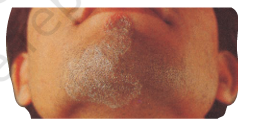
Based on the provided image and text of ringworm infection, which specific environmental factors primarily aid genera like Microsporum and Trichophyton to thrive in skin folds such as the groin?
QUESTION 16 OF 20
The image demonstrates dry, scaly lesions characteristic of ringworm. Apart from the facial skin shown, which other parts of the body are explicitly stated in NCERT to be affected by these main symptoms?
QUESTION 17 OF 20
Consider the following public hygiene and vector control strategies:
I. Periodic cleaning and disinfection of water reservoirs.
II. Avoiding stagnation of water in residential areas.
III. Spraying of insecticides in ditches and swamps.
IV. Regular cleaning of household coolers. Which of these directly aim at eliminating the breeding places of mosquito vectors?
QUESTION 18 OF 20
Arrange the sequence representing biological vector control using Gambusia as implied by ecological principles in NCERT:
1. Water stagnates in ponds in and around residential areas.
2. Mosquitoes breed and form larvae in the water.
3. Gambusia fishes are introduced into the ponds.
4. Gambusia feed on the mosquito larvae, halting disease transmission.
QUESTION 19 OF 20
Which of the following diseases is NOT targeted by the vector control strategy of introducing wire mesh on doors and using mosquito nets?
QUESTION 20 OF 20
Widespread incidences of dengue and chikungunya emphasize the need for robust vector control. In this context, how does controlling the Aedes mosquito directly differ from controlling Entamoeba histolytica transmission?
Test Complete!
Answer Review
1 Which of the following statements is INCORRECT regarding the pathogenic nature of the malarial parasite?
Malaria has a well-documented evolutionary history of impacting human populations. Plasmodium is a microscopic, single-celled protozoan parasite, not a helminth. Different clinical manifestations of malaria depend on the specific infecting species.
- Statement B is incorrect because Plasmodium belongs to the kingdom Protista and is a microscopic, unicellular protozoan parasite (specifically a sporozoan). It is not a macroscopic helminth (which are multicellular worms like roundworms or tapeworms). Statement A is biologically and historically accurate, as malaria has been recorded throughout human civilization. Statement C correctly notes that P. vivax, P. malaria, and P. falciparum are all distinct species belonging to the same protozoan genus, Plasmodium. Statement D is also correct, as each species causes a distinct type of malaria with differing clinical severity and fever cycles.
- Option A → This statement is accurate; humans have actively fought malaria for thousands of years, so it cannot be chosen for a negative question.
- Option C → This accurately describes the genus-species taxonomy of these protozoans as outlined in standard biological classifications.
- Option D → This is factually correct; different species produce distinct clinical timelines, such as benign tertian or malignant malaria.
Used: Odd One Out
Application: Grouping statements A, C, and D reveals they all describe Plasmodium as a microscopic protozoan with multiple species. Statement B stands out because it misclassifies the organism as a macroscopic helminth worm.
Final Logic: Identifying basic taxonomic misclassifications allows you to spot incorrect biological statements quickly.
Plasmodium is a Protozoan, never a Parasitic worm.
2 Consider the following statements regarding malignant malaria:
I. It is caused by Plasmodium falciparum.
II. It is characterized as the most serious type of malaria.
III. It usually resolves without treatment and is rarely fatal.
IV. It requires the Aedes mosquito as its primary vector. Which of the statements are correct?
Malignant malaria is specifically caused by the protozoan Plasmodium falciparum. This specific form is clinically recognized as the most severe and dangerous type of malaria. It requires urgent medical treatment and is transmitted by Anopheles, not Aedes mosquitoes.
- Statement I is correct because Plasmodium falciparum is the specific pathogen responsible for causing malignant malaria. Statement II is correct because it is the most serious form of the disease, often leading to cerebral complications and organ failure. Statement III is incorrect because malignant malaria can be fatal if left untreated, rather than resolving on its own. Statement IV is incorrect because all human malarial parasites are transmitted by female Anopheles mosquitoes, while Aedes mosquitoes transmit dengue and chikungunya. Therefore, only statements I and II are correct, matching Option A.
- Option B → Incorrectly includes Statement III, which wrongly claims that malignant malaria resolves on its own and is rarely fatal.
- Option C → Includes Statement IV, which names the wrong mosquito vector (Aedes), and misses Statement I.
- Option D → Includes the incorrect vector claim in Statement IV while omitting the clinical severity described in Statement II.
Used: Elimination
Application: Check Statement IV. Knowing that malaria is transmitted by Anopheles and not Aedes makes Statement IV false. Eliminating Options with IV (C and D) leaves A and B. Checking Statement III shows it is false, eliminating B and confirming A.
Final Logic: Eliminating known vector and clinical errors narrows the choices down to the correct pair.
Falciparum is Fatal if untreated; Anopheles is the vector for All malaria.
3 Match the stages of the Plasmodium human cycle with their physiological descriptions:
| List I | List II |
|---|---|
| 1. Sporozoites | 1. First site of parasite multiplication in humans |
| 2. Liver cells | 2. Toxic substance released upon cellular rupture |
| 3. Red Blood Cells | 3. The infectious form entering via mosquito bite |
| 4. Haemozoin | 4. Site of multiplication leading to recurring chill |
Sporozoites are the narrow, infectious forms injected into the human bloodstream by a mosquito bite. The human liver serves as the first site for asymptomatic parasite multiplication. Parasites multiply inside red blood cells, causing them to rupture and release toxins. Haemozoin is the toxic byproduct that triggers clinical malarial fevers.
- According to the life cycle of Plasmodium in humans: The parasite enters the human body as infectious sporozoites via the bite of an infected female Anopheles mosquito (A matches 3). These sporozoites travel through the blood directly to the liver cells, which serve as the initial site of multiplication (B matches 1). The parasites then enter the red blood cells to multiply further, leading to periodic cell rupture (C matches 4). This rupture releases a toxic crystalline substance called haemozoin, which causes recurring chills and high fevers (D matches 2). This sequence matches option D.
- Option B → Misidentifies sporozoites (A) as a toxic substance (2) and places initial liver development in the wrong part of the cycle.
- Option C → Incorrectly matches liver cells (B) with the erythrocytic cycle description (4).
- Option D → Reverses the cycle by matching sporozoites (A) directly with liver functions (1) and misplacing the role of haemozoin.
Used: Option Grouping
Application: Identify the connection between Sporozoites (A) and their description as the "infectious form" (3). Since A-3 only appears in Options A and C, you can eliminate B and D. Next, matching liver cells (B) to the first site of multiplication (1) confirms option A.
Final Logic: Pairing terms based on their sequence in the parasite lifecycle helps narrow down the correct matching Options.
Sporozoite = Starting infectious stage; Haemozoin = High fever toxin.
4 During the human cycle of Plasmodium, what immediately follows the initial multiplication of the parasites within the liver cells?
After multiplying in the liver, the parasites break out into the bloodstream. These blood-stage parasites target and invade human red blood cells. Their growth inside these cells leads to synchronized cell rupture.
- Once the sporozoites enter liver cells, they reproduce asexually to form merozoites. These merozoites burst out of the liver cells and enter the bloodstream, where they immediately target and invade red blood cells (RBCs). Inside the RBCs, they multiply further and cause the cells to rupture, releasing more parasites along with the toxin haemozoin. This step directly follows the liver phase in the human lifecycle.
- Option A → Sporozoites develop and migrate to salivary glands inside the mosquito's body, not within human organs.
- Option C → Haemozoin is released directly into the bloodstream when RBCs rupture, not into the lymphatic vessels during the liver stage.
- Option D → Gametocytes can only be taken up by a mosquito during a blood meal after the blood-stage infection has fully developed.
Used: Contextual/Tonal Matching
Application: Follow the physical path of the parasite. When it exits the liver cells, it must enter the bloodstream, making red blood cells (B) the next logical target.
Final Logic: Tracking the step-by-step movement of the parasite through the host's organs reveals the next phase of the infection.
From the Liver, the parasite travels straight to the Liquid blood cells (Liver to Life in RBCs).
5 Which of the following is NOT an accurate characteristic of Haemozoin?
Haemozoin is a dark byproduct formed when parasites digest hemoglobin inside red blood cells. It is not produced during the initial phase of multiplication inside liver cells. The synchronized release of this toxin causes periodic malarial fevers.
- Statement C is inaccurate because haemozoin is produced during the erythrocytic stage inside red blood cells, where the parasite breaks down hemoglobin. It is not created during the initial multiplication phase inside liver cells. Statements A, B, and D are all accurate descriptions: haemozoin is released into the bloodstream when infected RBCs burst, acts as a pyrogenic toxin, and triggers the characteristic chills and fevers that repeat every 3 to 4 days. This makes C the correct answer for this negative question.
- Option A → This is factually correct; the toxin is released into the blood at the exact moment the host RBC membrane ruptures.
- Option B → This is factually correct; haemozoin acts as a foreign toxin that triggers a strong systemic inflammatory response.
- Option D → This is factually correct; the accumulation of this toxin sets off the recurring fevers typical of malaria.
Used: Extreme Word Filter
Application: Statement C states that haemozoin is produced "primarily during the initial multiplication in the liver." Since liver cells lack hemoglobin, the parasite cannot produce hemoglobin byproducts there, making this statement false.
Final Logic: Spotting biochemical inconsistencies helps identify incorrect physiological statements.
Haemozoin comes from Hemoglobin, which is only found inside Hematocytes (RBCs), not liver cells.
6 The strict synchronization of recurring chill and high fever every three to four days in a malaria patient is a direct clinical manifestation of:
The malarial fever cycle is tied directly to the development of the parasite inside blood cells. Parasites multiply synchronously until the host red blood cells burst open together. This sudden release of accumulated haemozoin triggers chills and fevers.
- The periodic chills and high fevers seen in malaria patients are caused by the synchronized life cycle of the parasite within the blood. The parasites multiply inside red blood cells over a fixed period. When these cells rupture simultaneously, they release a flood of new parasites along with the toxin haemozoin into the bloodstream, triggering an immediate fever response.
- Option A → Sporozoites leave the bite site quickly and move to the liver within minutes; they do not cause a ongoing, multi-day fever cycle.
- Option C → The lymphatic system responds to the infection, but it does not control the specific 3-to-4-day timing of the fevers.
- Option D → The destruction of liver cells occurs during the early, asymptomatic stage of the infection and does not cause recurring fevers.
Used: Elimination
Application: Eliminate option A because sporozoites move quickly during initial entry. Eliminate option D because liver cell rupture is asymptomatic. Eliminate option C because lymph node responses are not timed to a strict multi-day cycle, leaving option B.
Final Logic: Matching the specific symptoms of a disease to the biological event that triggers them points to the correct answer.
Recurring fever = Rupturing RBCs releasing toxin.
7 Arrange the biological sequence of events occurring during the malarial vector cycle:
1. Parasites enter the mosquito's body via blood meal.
2. The female Anopheles mosquito bites an infected person.
3. Sporozoites are stored in the mosquito's salivary glands.
4. Parasites undergo further development and multiply to form sporozoites
The vector cycle begins when a mosquito bites a person who carries the parasite gametocytes. The parasites travel into the mosquito's gut along with the ingested blood. The parasites develop and multiply inside the mosquito to form new sporozoites. These sporozoites migrate to the salivary glands, ready for the next transmission.
- The cycle inside the mosquito vector starts when a female Anopheles mosquito bites an infected human host (2). This bite allows the parasite gametocytes to enter the mosquito's body through the blood meal (1). Inside the mosquito's intestine, the parasites undergo fertilization and development, multiplying to form infectious sporozoites (4). Finally, these sporozoites emerge and migrate to the mosquito's salivary glands, where they are stored until the next bite (3). This sequence corresponds to 2 → 1 → 4 → 3, which is option A.
- Option B → Suggests the parasites enter the mosquito (1) before the mosquito actually bites the infected person (2).
- Option C → Places parasite development (4) before the mosquito has taken the blood meal containing the parasites (1).
- Option D → Reverses the cycle, claiming that sporozoites are stored and developed before the mosquito has even bitten an infected person.
Used: Elimination
Application: The vector cycle must begin with the physical act of the mosquito biting an infected human (2), which eliminates
- Options: B and D. The cycle must end with the sporozoites stored in the salivary glands (3) ready for the next host, which eliminates option C and leaves A.
Final Logic: Organizing biological steps from initial ingestion to final storage confirms the correct chronological sequence.
Bite (2) → Ingest (1) → Develop (4) → Store (3) [BIDS].
8 From an epidemiological perspective, the storage of sporozoites in the salivary glands of the female Anopheles mosquito ensures that:
Storing sporozoites in the salivary glands places them directly in the path of fluid transmission. When the mosquito bites, it injects saliva containing anticoagulants along with the parasites. This anatomical localization ensures the parasite can spread efficiently to the next human host.
- The migration of sporozoites to the mosquito's salivary glands is a key evolutionary adaptation for transmission. When a female Anopheles mosquito bites a human, it injects saliva into the wound to prevent the blood from clotting. Storing the sporozoites in the salivary glands ensures they are automatically injected into the human host's bloodstream along with the saliva, making transmission highly efficient.
- Option A → Haemozoin is a byproduct found in human blood cells; it does not affect the mosquito or relate to its salivary glands.
- Option C → Salivary secretions contain anticoagulants to help the mosquito feed, but the presence of the parasite does not improve digestion.
- Option D → Plasmodium is not passed down from mother mosquitoes to their offspring; the cycle requires moving back and forth between humans and mosquitoes.
Used: Contextual/Tonal Matching
Application: Match the anatomical location to its function. The salivary glands produce the fluid injected during a bite, meaning this location is specialized for injecting parasites into a new host (B).
Final Logic: Evolutionary traits in parasites match the transmission pathways they use to spread.
Salivary gland storage = Swift injection into the Skin.
9 Why does an infection with Entamoeba histolytica specifically present with stools containing excess mucous and blood clots?
Entamoeba histolytica is an endoparasitic protozoan that targets the human large intestine. The parasite secretes tissue-dissolving enzymes that break down the intestinal lining, causing ulcers. Damage to this tissue leads to mucus secretion and bleeding, which appear in the patient's stool.
- Entamoeba histolytica is a protozoan parasite that lives in the large intestine of humans and causes amoebiasis (amoebic dysentery). The parasite invades the mucosal layers of the colon wall and secretes histolytic enzymes that dissolve tissue, creating flask-shaped ulcers. This localized tissue damage and inflammation cause the body to release excess mucus and blood from damaged capillaries, which are then passed out in the stool.
- Option A → Entamoeba does not infect or multiply inside red blood cells; that is a characteristic feature of the malaria parasite.
- Option C → This description confuses the intestinal pathology of amoebiasis with the lymphatic blockage caused by filarial worms.
- Option D → Houseflies carry the parasite mechanically onto food and water; they do not bite or inject pathogens into human tissue.
Used: Elimination
Application: Eliminate option A because Entamoeba does not live inside red blood cells. Eliminate option C because it describes lymphatic disease. Eliminate option D because houseflies cannot inject parasites into tissue, leaving option B.
Final Logic: Matching the location of a parasite to the tissue damage it causes explains its clinical symptoms.
Entamoeba attacks the Enteric large intestine, causing mucosal bleeding.
10 Which of the following statements about the transmission of amoebiasis is INCORRECT?
Houseflies serve as mechanical carriers that transport pathogens on their feet and bodies. Entamoeba histolytica does not multiply or undergo sexual reproduction inside houseflies. The infection spreads when flies carry parasite cysts from waste directly onto food and water.
- Statement C is incorrect because houseflies (Musca domestica) serve as mechanical carriers (or mechanical vectors) for Entamoeba histolytica. The parasite does not live inside the fly or go through any part of its lifecycle or sexual reproduction there. Instead, the fly simply carries the parasite cysts on its legs and body from infected waste to uncovered food and water. Statements A, B, and D are all accurate descriptions of how amoebiasis spreads through contaminated food and water. This makes C the correct choice for this negative question.
- Option A → This is factually correct; houseflies are a primary link between exposed human waste and fresh food.
- Option B → This is factually correct; water contaminated with fecal matter is a major transmission pathway for amoebiasis.
- Option D → This is factually correct; the physical movement of flies onto food is an example of mechanical contamination.
Used: Contextual/Tonal Matching
Application: Note the contradiction between mechanical transmission and biological vectors. Houseflies act as simple, passive carriers, meaning any statement claiming they serve as hosts for parasite reproduction (C) must be incorrect.
Final Logic: Differentiating between active biological hosts and passive mechanical carriers allows you to spot errors in transmission descriptions.
Houseflies are just a Mechanical Mover (taxi) for amoeba cysts.
11
Ascaris lumbricoides is a large macroparasitic roundworm that populates the human small intestine. In heavy infections, the sheer physical mass of tangled adult worms creates a mechanical obstruction. This obstruction completely jams the intestinal lumen, presenting a critical clinical emergency.
- According to the provided passage and NCERT details on Ascariasis: Ascaris is an endoparasite that inhabits the lumen of the small intestine. While it causes metabolic and systemic symptoms like internal bleeding, muscular pain, fever, and anemia due to nutrient deprivation, a massive buildup of these large roundworms results in a severe physical and mechanical consequence: the complete blockage of the intestinal passage. This matches Option B.
- Option A → This is a pathological hallmark of filariasis (Wuchereria), where helminths block lymph channels, not the gastrointestinal tract.
- Option D → This is a microscopic cellular consequence seen in malaria (Plasmodium), not a macro-mechanical blockage caused by helminth worms.
- Option C → This describes the superficial clinical presentation of fungal ringworms (Microsporum, Trichophyton), which affect keratinized cutaneous tissues rather than internal organs.
Used: Contextual/Tonal Matching
Application: The question specifically asks for a "severe internal mechanical consequence." Tangled masses of physical worms blocking a narrow tube (the intestine) fits the definition of a mechanical block, pointing directly to Option B.
Final Logic: Matching structural descriptions to the physical traits of a pathogen helps isolate mechanical symptoms from microscopic or systemic ones.
Ascaris causes Antestinal (Intestinal) Blockage when the Belly fills with worms.
12
Adult female Ascaris worms produce thousands of eggs daily inside the human intestine. These eggs are passed out of the body into the environment along with the host's feces. This fecal contamination introduces the parasite into local soil, water sources, and agricultural crops.
- The propagation of Ascariasis relies entirely on the fecal-oral route. As explicitly stated in the passage and NCERT text, the eggs of the parasite are excreted along with the feces of infected individuals. In areas with poor sanitation, these feces contaminate the surrounding soil, groundwater, and crops. Healthy individuals then ingest these embryonated eggs by consuming contaminated water, unwashed fruits, or raw vegetables, continuing the cycle. This aligns perfectly with Option C.
- Option A → Houseflies act as mechanical carriers for amoebic dysentery (Entamoeba), but they are not the primary vector responsible for spreading Ascaris eggs into the environment.
- Option B → Mosquitoes act as specialized biological vectors for blood-borne pathogens like malaria and filariasis, whereas Ascaris is an intestinal pathogen that spreads without an insect vector.
- Option D → Inhalation of respiratory droplets is the transmission pathway for air-borne bacterial or viral infections like pneumonia and the common cold.
Used: Elimination
Application: Eliminate Option B because Ascaris does not have a mosquito stage. Eliminate Option D because it is an intestinal infection, not a respiratory one. Eliminate Option A because houseflies are tied to amoebiasis transmission, leaving Option C as the primary pathway stated in the text.
Final Logic: Pinpointing the correct physiological exit point (feces) and entry point (ingestion) reveals the transmission pathway of intestinal helminths.
Excreted Eggs in stool enter the Environment to contaminate the food chain.
13 The filarial worms Wuchereria bancrofti and W. malayi lead to gross deformities. Apart from the lymphatic vessels of the lower limbs, which other anatomical structures are often affected?
Filarial worms preferentially colonize the deep lymphatic vessels of the lower half of the body. Chronic inflammation blocks the lymphatic drainage of both the legs and nearby pelvic tissues. This obstruction often leads to severe swelling and gross deformities in the external genital organs.
- Wuchereria bancrofti and Wuchereria malayi cause filariasis (elephantiasis), a disease marked by slowly developing, chronic inflammation of the organs where the parasites live for years. While the lymphatic vessels of the lower limbs are the most common site of visible swelling, the parasites also target the lymphatic networks draining the pelvic region. This chronic blockage leads to fluid backup, causing major swelling and deformities in the external genital organs, as highlighted in the NCERT text. This makes Option B correct.
- Option A → The liver lobules are targeted by the malarial parasite during its initial asexual multiplication phase, not by filarial worms.
- Option C → The salivary glands are the storage site for Plasmodium sporozoites inside the mosquito vector, and are not involved in human filariasis.
- Option D → The alveoli of the lungs are infected by respiratory pathogens like Streptococcus pneumoniae, which cause fluid accumulation in the air sacs.
Used: Odd One Out
Application: Options A, C, and D represent internal visceral or respiratory structures that do not connect to the lower lymphatic system. Genital organs (Option B) share the same regional lymphatic drainage network as the lower limbs, making them susceptible to lymphatic fluid backup.
Final Logic: Understanding which organs share a lymphatic drainage pathway helps explain the regional pattern of elephantiasis symptoms.
Gross deformities occur in the legs and Genitals due to Gigantic fluid backup.
14 Match the exact terminology used in NCERT for Filariasis:
| List I | List II |
|---|---|
| 1. Wuchereria | 1. Common site of chronic inflammation |
| 2. Lymphatic vessels | 2. Disease resulting in gross deformities of limbs |
| 3. Elephantiasis | 3. The specific transmitting agents |
| 4. Female mosquito vectors | 4. The filarial worm genus |
Wuchereria is the genus of biological roundworms responsible for filariasis. Lymphatic vessels are the primary anatomical structures where chronic inflammation occurs. Elephantiasis is the clinical disease that causes severe limb deformities. Female mosquitoes act as vectors that transmit the parasite between hosts.
- Matching the scientific terms with their definitions based on the NCERT chapter on filariasis: Wuchereria represents the specific helminth worm genus (A matches 4). The lymphatic vessels of the lower limbs are the primary site of infection and long-term inflammation (B matches 1). Elephantiasis is the clinical name for the advanced disease characterized by severe swelling and limb deformities (C matches 2). Female mosquito vectors (specifically Culex) act as the transmitting agents that pass the larvae to a new host (D matches 3). This gives the sequence A-4, B-1, C-2, D-3, matching Option C.
- Option B → Misidentifies the worm genus Wuchereria (A) as a site of inflammation (1) and mixes up the other definitions.
- Option C → Incorrectly pairs the lymphatic vessels (B) with the gross deformities of the limbs (2) rather than the underlying site of inflammation.
- Option D → Reverses the terms, incorrectly pairing the helminth genus (A) with the transmitting mosquito vector (3).
Used: Option Grouping
Application: Match the genus name Wuchereria (A) with its classification as a "filarial worm genus" (4). This pairing (A-4) is only present in Options A and C, allowing you to eliminate Options B and D. Next, matching Elephantiasis (C) to "gross deformities" (2) confirms Option A.
Final Logic: Isolating taxonomic classifications and matching clinical terms helps resolve complex matching matrices quickly.
Wuchereria is the Worm genus; Lymphatics are the Location of inflammation.
15 Based on the provided image and text of ringworm infection, which specific environmental factors primarily aid genera like Microsporum and Trichophyton to thrive in skin folds such as the groin?
Dermatophytes are superficial fungi that feed on keratin in the skin. Fungi require a warm, damp environment to sprout spores and grow. Skin folds like the groin naturally trap heat and moisture, creating an ideal breeding ground.
- Fungi belonging to the genera Microsporum, Trichophyton, and Epidermophyton are responsible for ringworm infections. These fungi are dermatophytes that live on the keratinized outer layers of the skin. As outlined in NCERT, environmental heat and moisture are the primary factors that help these fungi grow and thrive. This explains why they commonly develop in warm, damp skin folds, such as the groin, axillae, or the spaces between the toes. This points to Option B.
- Option A → Cold and dry conditions slow down fungal reproduction and dry out the skin, which prevents fungal spores from establishing an infection.
- Option C → High ultraviolet (UV) radiation acts as a natural disinfectant that damages fungal DNA, inhibiting growth rather than supporting it.
- Option D → These dermatophytes are aerobic organisms that grow on the superficial layers of the skin; they do not require anaerobic conditions.
Used: Contextual/Tonal Matching
Application: Think of standard environmental conditions that support fungal growth. Fungi grow best in warm, damp places (like mushrooms in a rainforest or mold in a bathroom). This ecological concept maps directly to "heat and moisture" (Option B).
Final Logic: Applying basic environmental biology rules helps identify the conditions needed for fungal skin infections to develop.
Fungi love a tropical environment: Heat + Moisture = Home for Microsporum.
16 The image demonstrates dry, scaly lesions characteristic of ringworm. Apart from the facial skin shown, which other parts of the body are explicitly stated in NCERT to be affected by these main symptoms?
Dermatophytes depend on keratin, a structural protein found in outer skin tissues. This protein is highly concentrated in human nails and hair shafts. As a result, ringworm infections target the skin, nails, and scalp.
- The primary clinical signs of a ringworm infection are dry, scaly lesions on the skin. Because the fungi that cause this condition feed on keratin, they infect other keratin-rich parts of the body. The NCERT textbook states that apart from general body skin, these lesions regularly appear on the nails and the scalp, often leading to brittle nails or patchy hair loss. This confirms Option B.
- Option A → Fungal dermatophytes cannot survive in deep mucosal tissues or the respiratory tract; internal lung infections are caused by different types of fungi.
- Option C → The intestinal mucosa is a soft, non-keratinized membrane where dermatophytes cannot grow; it is targeted by parasites like Entamoeba.
- Option D → Lymphatic vessels are internal circulatory pathways targeted by filarial roundworms, not by superficial fungal infections.
Used: Odd One Out
Application: Options A, C, and D all describe internal, deep visceral organs or fluid pathways. Nails and the scalp (Option B) are superficial structures made of keratin, making them the only Options that fit the growth patterns of dermatophyte fungi.
Final Logic: Grouping body parts by tissue type helps determine which structures are vulnerable to specific pathogens.
Ringworm attacks the outer defenses: Skin, Scalp, and Nails (Superficial Structures Now).
17 Consider the following public hygiene and vector control strategies:
I. Periodic cleaning and disinfection of water reservoirs.
II. Avoiding stagnation of water in residential areas.
III. Spraying of insecticides in ditches and swamps.
IV. Regular cleaning of household coolers. Which of these directly aim at eliminating the breeding places of mosquito vectors?
Mosquitoes require standing water to lay eggs and complete their larval stages. Managing both large bodies of water and small household sources disrupts this cycle. Combining cleaning, draining, and chemical treatments targets breeding sites at all levels.
- To control vector-borne diseases like malaria, filariasis, dengue, and chikungunya, the most effective strategy is to eliminate mosquito breeding sites. Statement I (disinfecting reservoirs) and Statement IV (cleaning water coolers) prevent mosquitoes from breeding in clean, standing water. Statement II (preventing puddles in residential neighborhoods) removes temporary breeding sites. Statement III (spraying insecticides in ditches and swamps) uses chemical controls to kill larvae in large areas of standing water. Because all four strategies directly target mosquito breeding sites, Option D is the correct choice.
- Option A → Incorrectly excludes statements I and III, which are critical public health measures used to manage larger breeding sites likemunicipal reservoirs and open swamps.
- Option B → Omits statement I, ignoring the fact that open water reservoirs can serve as major breeding grounds if left untreated.
- Option C → Focuses only on large public works while ignoring the smaller, household breeding sites covered in statements II and IV.
Used: Extreme Word Filter
Application: Evaluate the scope of the question. Since mosquitoes can lay eggs in any volume of standing water—from a massive swamp to a small puddle inside a water cooler—any intervention that cleans, drains, or treats standing water helps eliminate breeding sites. This means all choices are valid.
Final Logic: Comprehensive vector management requires combining household chores with larger public sanitation efforts to successfully eliminate breeding sites.
If it holds water or drains a swamp, cleaning it stops the mosquito stomp.
18 Arrange the sequence representing biological vector control using Gambusia as implied by ecological principles in NCERT:
1. Water stagnates in ponds in and around residential areas.
2. Mosquitoes breed and form larvae in the water.
3. Gambusia fishes are introduced into the ponds.
4. Gambusia feed on the mosquito larvae, halting disease transmission.
The sequence begins when stagnant water creates a suitable habitat for insects. Adult mosquitoes use this standing water to lay eggs, which hatch into swimming larvae. Predatory Gambusia fish are introduced into the infected pools of water. The fish eat the larvae, breaking the insect lifecycle and stopping the spread of disease.
- The biological control process follows a logical chain of cause and effect: First, environmental changes or poor drainage cause water to stagnate in ponds near residential areas (1). This standing water provides a breeding ground where adult mosquitoes lay eggs that hatch into aquatic larvae (2). To manage this pest problem without chemicals, predatory Gambusia fish are introduced into the water (3). Finally, the fish eat the mosquito larvae, reducing the insect population and stopping the spread of disease (4). This sequence follows the order 1 → 2 → 3 → 4, matching Option B.
- Option A → Suggests that fish are added to the ponds (3) before the mosquitoes have even laid eggs or formed larvae (2), which disrupts the natural predator-prey timeline.
- Option C → Places the introduction of the fish (3) at the very start of the sequence, before the stagnant water bodies (1) have formed.
- Option D → Reverses the process, stating that larvae are present (2) before the stagnant water exists (1), and shows the fish eating larvae before being introduced to the ponds.
Used: Elimination
Application: The timeline must start with the creation of the habitat—stagnant water (1). This rules out Options C and D. Next, the pests must be present (2) before you introduce a predator to eat them (3), which eliminates Option A and leaves Option B.
Final Logic: Biological pest control strategies follow a predictable timeline: habitat creation occurs first, followed by pest infestation, predator introduction, and pest reduction.
Pond forms (1) → Pests hatch (2) → Predator arrives (3) → Predator eats (4).
19 Which of the following diseases is NOT targeted by the vector control strategy of introducing wire mesh on doors and using mosquito nets?
Wire window mesh and bed nets form physical barriers that keep insects out of homes. These methods protect people from flying insect vectors like mosquitoes. Ringworm is a fungal infection spread by direct touch or shared objects, not by insects.
- Using mosquito nets and installing wire mesh on doors and windows are physical defense strategies designed to keep flying insect vectors out of living spaces. These methods help prevent infections transmitted by mosquitoes, including malaria (Anopheles), filariasis (Culex), and dengue (Aedes). Ringworm, however, is a fungal skin infection spread through direct skin-to-skin contact or by sharing contaminated personal items like towels, clothing, or combs. Because it does not use an insect vector, screens and bed nets provide no protection against it, making Option D the correct answer to this negative question.
- Option A → Malaria is spread by night-biting Anopheles mosquitoes, making bed nets an effective way to prevent transmission.
- Option B → Filariasis is carried by mosquitoes, meaning physical window screens help reduce indoor transmission risks.
- Option C → Dengue is spread by Aedes mosquitoes, so using wire mesh on windows helps keep these daytime-biting insects out of homes.
Used: Odd One Out
Application: Grouping Options A, B, and C shows they are all vector-borne diseases transmitted by flying mosquitoes. Ringworm (Option D) stands out as a fungal skin infection spread through contact, making it the odd one out.
Final Logic: Grouping diseases by how they spread helps isolate the infection that will not respond to insect control measures.
Nets and mesh keep bugs outside; they can't stop a fungus from hitching a ride.
20 Widespread incidences of dengue and chikungunya emphasize the need for robust vector control. In this context, how does controlling the Aedes mosquito directly differ from controlling Entamoeba histolytica transmission?
Aedes is an insect vector that breeds in clean, stagnant pools of water near homes. Entamoeba histolytica is an intestinal parasite spread through the fecal-oral route. Preventing dengue requires insect control, while preventing amoebiasis relies on food and water sanitation.
- This question contrasts two different transmission pathways: vector-borne viral diseases vs. fecal-oral protozoan infections. Aedes is the mosquito vector that transmits dengue and chikungunya viruses; because it lays its eggs in standing water, control efforts focus on draining puddles, water coolers, and open containers. Entamoeba histolytica is a protozoan that causes amoebiasis and spreads through food or water contaminated with fecal matter. Preventing its spread requires food hygiene, covering meals to keep flies off, and drinking clean water. This distinction is correctly outlined in Option A.
- Option B → Antihistamines treat allergic reactions and antibiotics treat bacterial infections; neither drug is used as a sanitation measure to control pathogen transmission.
- Option C → Reverses the prevention strategies; handwashing targets intestinal parasites like Entamoeba, while wire mesh screens keep out flying insects like Aedes.
- Option D → Gambusia fish only eat mosquito larvae in bodies of water; they have no effect on the transmission of amoebic cysts in food or drinking water.
Used: Elimination
Application: Evaluate the transmission mechanisms. Since Aedes is a mosquito and Entamoeba is an intestinal parasite, look for the option that pairs mosquito control (draining water) with food safety (covering meals), which leads directly to Option A.
Final Logic: Matching public health interventions to a pathogen's specific transmission route helps identify the correct preventive measures.
Aedes control means draining the Aquatic sites; Entamoeba control means protecting what you Eat.