
CUET UG Biology Booster Test 2 Evidences for Biological Evolution
📌 Answers are locked once submitted — results and explanations appear at the end.
QUESTION 1 OF 20
QUESTION 2 OF 20
QUESTION 3 OF 20
Read the following statements regarding the dating of fossils:
I. The age of fossils can be calculated using radioactive-dating.
II. Radioactive-dating relies on principles fundamentally different from paleontological sediment observation.
III. Paleontological evidence completely replaces the need for calculating fossil age. Which of the statements logically align with the text's mention of fossil dating?
QUESTION 4 OF 20
The restriction of certain life forms to specific geological time-spans most strongly refutes which traditional idea?
QUESTION 5 OF 20
Which of the following examples does NOT represent divergent evolution?
QUESTION 6 OF 20
Despite having humerus, radius, ulna, carpals, metacarpals, and phalanges, why do the forelimbs of whales and bats look and function differently?
QUESTION 7 OF 20
Match the analogous structures to their respective organism groups showing convergent evolution:
| Column I | Column II |
|---|---|
| I. Eye | P. Penguin and Dolphin |
| II. Flippers | Q. Octopus and Mammals |
| III. Wings | R. Butterfly and Birds |
QUESTION 8 OF 20
Regarding the wings of birds and butterflies, which statements accurately reflect their evolutionary relationship?
I. They are anatomically distinct.
II. They represent a situation opposite to homology.
III. They evolved for the same function due to similar adaptive pressures.
IV. They are homologous structures.
QUESTION 9 OF 20
In the context of plant evolution, why are Bougainvillea thorns and Cucurbita tendrils considered homologous despite their different functions (protection vs. climbing)?
QUESTION 10 OF 20
Which statement is NOT correct regarding sweet potato and potato modifications?
QUESTION 11 OF 20
Ernst Heckel's proposal of embryological support was primarily based on what specific observation?
QUESTION 12 OF 20
Karl Ernst von Baer's refutation of Heckel's theory highlights which core principle about embryonic development?
QUESTION 13 OF 20
Match the evidence type to its core comparative subject:
| Column I | Column II |
|---|---|
| I. Paleontological Evidence | P. Protein and gene similarities |
| II. Embryological Evidence | Q. Bone structure patterns (e.g., forelimbs) |
| III. Anatomical Evidence | R. Vestigial gill slits in developmental stages |
| IV. Biochemical Evidence | S. Fossils in sedimentary rocks |
QUESTION 14 OF 20
Which of the following inferences CANNOT be drawn from shared gene sequences among diverse organisms?
QUESTION 15 OF 20
Arrange the logical sequence of anthropogenic evolution via breeding as suggested by the text:
I. Creation of new, distinct breeds differing from others.
II. Man selects and domesticates wild animals for agriculture or security.
III. Intensive breeding programs are applied over hundreds of years.
IV. The realization that if man can do this in centuries, nature can do it over millions of years.
QUESTION 16 OF 20
Which of the following is NOT true about the variation seen in domesticated animals like dogs?
QUESTION 17 OF 20
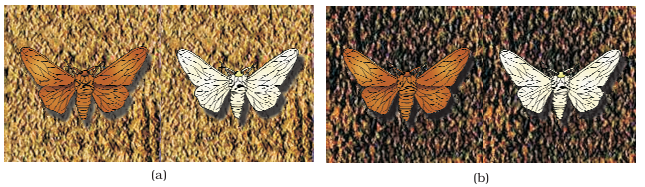
Based on the environmental conditions depicted in figure (B) (polluted area), why did the proportion of moths reverse in 1920 compared to the 1850s?
QUESTION 18 OF 20
According to figure (A), how did the presence of lichens influence predation in the unpolluted area?
QUESTION 19 OF 20
Arrange the sequence of events leading to contemporary antibiotic resistance:
I. Employment of antibiotics against microbes.
II. Appearance of resistant organisms in a time scale of months or years.
III. A mixed microbial population containing a few chance mutant variants exists.
IV. Selection of the resistant varieties due to survival advantage.
QUESTION 20 OF 20
The rapid emergence of herbicide and pesticide-resistant varieties demonstrates that evolution is:
Test Complete!
Answer Review
1
Fossils are the remnants of past life forms. Their location in specific sedimentary layers acts as a temporal marker. Life forms captured in a layer indicate the presence of that organism during that specific geological period.
�� The core logic of paleontology presented in the text is that different-aged sedimentary rocks trap organisms that existed during the formation of those sediments. → By analyzing which organisms appear in which layers, geologists can determine the chronological sequence (geological periods) of these life forms. Option B correctly identifies this fundamental paleontological principle of association.
- Option A → Fossilization is not based on constant decay rates of hard parts; radioactive decay is used for dating, not decay of organic hard parts themselves.
- Option C → The text explicitly mentions that some fossils differ from modern organisms, refuting this.
- Option D → Spontaneous generation is a discredited scientific theory and is not the basis for sediment or fossil study.
Used: Elimination
Application: Eliminate Options that contradict biological principles (A, C, D) or are logically impossible.
Final Logic: The only logically valid interpretation of the passage's description of fossil-sediment association is B.
"Same layer = Same time = Same life."
2
Sedimentary rocks accumulate over long periods. Lower layers are older, upper layers are younger. This vertical sequence provides a timeline of the earth's crust.
�� The text describes a cross-section of the earth's crust as having layers arranged one over the other during the "long history of earth." → This arrangement constitutes a "stratigraphic record." It allows scientists to look back through geological time, making it a chronological record of Earth's history.
- Option A → Sedimentary layers do not provide structural support against volcanic activity.
- Option C → Sedimentary layers are not catalysts; they are the result of deposition.
- Option D → The passage states they formed during the "long history," not simultaneously.
Used: Contextual/Tonal Matching
Application: Identify the phrase "long history of earth" in the passage and match it to "chronological record."
Final Logic: Chronology is the only logical outcome of layering over a "long history."
"Layers = Time = History."
3 Read the following statements regarding the dating of fossils:
I. The age of fossils can be calculated using radioactive-dating.
II. Radioactive-dating relies on principles fundamentally different from paleontological sediment observation.
III. Paleontological evidence completely replaces the need for calculating fossil age. Which of the statements logically align with the text's mention of fossil dating?
Radioactive dating is an absolute dating method. Sediment observation (stratigraphy) is a relative dating method. Both are used in conjunction; they do not replace each other.
�� Statement I is correct because radioactive decay is the standard scientific method for absolute dating of fossils. → Statement II is correct because sediment observation (relative dating) uses superposition (layers), whereas radioactive dating uses atomic physics. → Statement III is incorrect because these methods are complementary, not mutually exclusive or substitutable.
- Option A → Incomplete, as Statement II is also a valid observation.
- Option C → Statement III is false, as one does not replace the other.
- Option D → Statement III is false.
Used: Elimination
Application: Eliminate any option containing III, which is a false claim.
Final Logic: Since I and II are accurate and III is false, B is the only correct choice.
"Radioactive = Absolute; Sediment = Relative; Both = Essential."
4 The restriction of certain life forms to specific geological time-spans most strongly refutes which traditional idea?
Life forms appear and disappear in the fossil record. This implies change, not constancy. Constant diversity contradicts the dynamic nature of evolution.
�� The traditional view (often religious or essentialist) held that the types of life we see today are exactly what have always existed. → Finding specific organisms restricted to specific time-spans proves that life changes (extinction and emergence), which directly refutes the idea of "fixed" or unchanging diversity.
- Option A → The fossil record actually supports, rather than refutes, variation.
- Option C → Fossil records support an ancient Earth, not refute it.
- Option D → The fossil record provides evidence for, not against, common ancestry.
Used: Elimination
Application: Eliminate Options that describe current scientific theories supported by fossils (A, C, D).
Final Logic: Only B represents the "old" idea that fossils are meant to challenge.
"Restricted time = Changing life = Refutes 'Fixed' diversity."
5 Which of the following examples does NOT represent divergent evolution?
Divergent evolution (Homology) = Common ancestor, different function. Convergent evolution (Analogy) = Different ancestor, same function. Penguins (birds) and Dolphins (mammals) are analogous.
�� Divergent evolution leads to homologous organs where the structural origin is the same, but the function differs. → Penguins and dolphins evolved flippers to solve the same problem (swimming) from different structural origins (bird wing vs. mammal limb). This is the definition of convergent evolution, not divergent.
- Option A → Forelimbs of mammals are homologous (divergent).
- Option B → Vertebrate heart/brain anatomy is homologous (divergent).
- Option D → Both are stem modifications (homologous/divergent).
Used: Odd One Out
Application: Compare all examples to the definition of Homology. A, B, and D are homologous; C is the only analog.
Final Logic: Analogy is the opposite of Divergent evolution.
"Diverge = Homology; Converge = Analogy (Penguin/Dolphin)."
6 Despite having humerus, radius, ulna, carpals, metacarpals, and phalanges, why do the forelimbs of whales and bats look and function differently?
Homology = Same origin, different function. Structural similarities suggest common ancestry. Adaptation to niches (swimming vs. flying) drives divergence.
�� The presence of the exact same bone sequence in two very different animals suggests they inherited these bones from a common ancestor. → Over millions of years, these limbs were modified through natural selection to suit different environments (the ocean for whales, the air for bats). This "branching out" of traits is divergent evolution.
- Option A → They do have a common ancestor.
- Option C → They are homologous, not analogous.
- Option D → They underwent divergent evolution, not convergent.
Used: Contextual/Tonal Matching
Application: Match the structural evidence (common bones) with the evolutionary mechanism (divergent evolution/adaptation).
Final Logic: Divergence = Same ancestor + Different adaptation.
"Divergence = Common Ancestor + Adaptation."
7 Match the analogous structures to their respective organism groups showing convergent evolution:
| Column I | Column II |
|---|---|
| I. Eye | P. Penguin and Dolphin |
| II. Flippers | Q. Octopus and Mammals |
| III. Wings | R. Butterfly and Birds |
Eye: Octopus (mollusk) and Mammal (vertebrate) = Analogous. Flippers: Penguin (bird) and Dolphin (mammal) = Analogous. Wings: Butterfly (insect) and Bird (vertebrate) = Analogous.
�� These pairs are classic examples of convergent evolution, where unrelated organisms evolve similar traits to overcome similar environmental challenges. → Option A maps these biological examples correctly based on standard evolutionary studies.
- Option B, C, D → Incorrectly pair the analogous organs with the organisms, disrupting the established scientific categorization.
Used: Option Grouping
Application: Validate the pairings one by one: I-Q is a famous example of convergent eye evolution. A is the only choice that starts correctly.
Final Logic: Accurate taxonomic/evolutionary mapping confirms A.
"Eye=Oct/Mam, Flipper=Peng/Dol, Wing=Butt/Bird."
8 Regarding the wings of birds and butterflies, which statements accurately reflect their evolutionary relationship?
I. They are anatomically distinct.
II. They represent a situation opposite to homology.
III. They evolved for the same function due to similar adaptive pressures.
IV. They are homologous structures.
Wings of birds (bony) vs. butterfly (chitinous) = Distinct anatomy. Analogy is the opposite of homology. Convergent evolution is driven by functional demand (flight).
�� Statement I is correct because they have no common skeletal structure. → Statement II is correct because analogy (different origin) is the inverse of homology (same origin). → Statement III is correct because flight is the selective pressure. → Statement IV is false, they are analogous, not homologous.
- Option A → Incomplete, missing the important definition in II.
- Option B → IV is false, making this choice incorrect.
- Option D → IV is false, making this choice incorrect.
Used: Elimination
Application: Eliminate any option that includes IV, because the wings are not homologous.
Final Logic: Since I, II, and III are all true, C is the only remaining option.
"Bird vs. Butterfly = Analogous = Opposite of Homology."
9 In the context of plant evolution, why are Bougainvillea thorns and Cucurbita tendrils considered homologous despite their different functions (protection vs. climbing)?
Both are modifications of axillary buds/stems. Same origin = Homology. Divergent evolution allows them to serve different survival roles.
�� Homology is determined by embryonic or anatomical origin, not function. → Since both thorns and tendrils arise from the axillary meristem (stem structures), they are homologous. This proves they diverged from a common ancestral state for different survival functions (thorns for defense, tendrils for support).
- Option B → They are homologous, not analogous/convergent.
- Option C → Homology is not about performing the same role; it's about shared origin.
- Option D → They exist in living plants, not just fossils.
Used: Elimination
Application: Eliminate Options that misdefine homology (B, C) or make false claims about the existence of the structures (D).
Final Logic: A is the standard scientific definition of homology in plants.
"Stem = Same origin = Homologous."
10 Which statement is NOT correct regarding sweet potato and potato modifications?
Sweet potato = Adventitious root. Potato = Tuber (Stem). Different origin + Same function = Analogy (NOT homology).
�� The question asks for the statement that is "NOT correct." → Statements A, B, and D are factually correct descriptions. → Statement C is incorrect because they are an example of analogy, not homology. Therefore, C is the correct answer.
- Option A → This is a true statement; sweet potato is a root.
- Option B → This is a true statement; potato is a stem.
- Option D → This is a true statement; they represent convergent evolution.
Used: Extreme Word Filter
Application: Look for the statement that defies the definition of Homology. Since they are different parts, they cannot be homologous.
Final Logic: The statement that claims they are homologous is false, thus it is the correct answer to the "NOT correct" prompt.
"Sweet Potato(Root) vs. Potato(Stem) = Analogy."
11 Ernst Heckel's proposal of embryological support was primarily based on what specific observation?
Heckel observed shared embryonic structures across species. The most famous example is the vestigial gill slits. These are common to all vertebrate embryos but are not found in the final adult form of many (like humans).
�� Heckel's theory focused on the developmental stage of the embryo. → He observed that various vertebrate embryos (fish, amphibians, birds, mammals) possess similar structures, such as pharyngeal pouches (gill slits), that disappear or are modified as the embryo matures into an adult. This led to his (ultimately criticized) Recapitulation Theory, but the observation itself remains a core part of embryological study.
- Option A → Adult vertebrates do not possess identical functional gills; this is only true for fish.
- Option C → This refers to Heckel's "Recapitulation Theory," but it is an interpretation of the observations, not the observation itself.
- Option D → The whole point of the observation was that there are similarities.
Used: Contextual/Tonal Matching
Application: Match "Heckel's proposal" with the key observation (shared embryo features) described in the NCERT text.
Final Logic: Option B accurately captures the anatomical observation underlying his proposal.
"Heckel = Shared Embryo Features (not shared Adults)."
12 Karl Ernst von Baer's refutation of Heckel's theory highlights which core principle about embryonic development?
Heckel claimed "Ontogeny recapitulates phylogeny" (embryo mimics adult ancestor). Von Baer provided the crucial counter-argument. He showed embryos develop specialized traits, not ancestral adult forms.
�� Von Baer challenged the idea that a human embryo "becomes" a fish, then an amphibian, and finally a human. → He argued that while embryos may share common structures, they do not pass through the adult stages of their ancestors. They simply share common developmental paths that diverge as they grow.
- Option A → Embryos definitely have evolutionary markers.
- Option B → Embryonic development is heavily influenced by natural selection.
- Option D → Gill slits in humans disappear or modify; they never become functional lungs.
Used: Elimination
Application: Eliminate B and D as biological falsehoods, and A as irrelevant.
Final Logic: C is the precise historical counter-argument attributed to Von Baer in biology.
"Baer = Against 'Passing through adult forms'."
13 Match the evidence type to its core comparative subject:
| Column I | Column II |
|---|---|
| I. Paleontological Evidence | P. Protein and gene similarities |
| II. Embryological Evidence | Q. Bone structure patterns (e.g., forelimbs) |
| III. Anatomical Evidence | R. Vestigial gill slits in developmental stages |
| IV. Biochemical Evidence | S. Fossils in sedimentary rocks |
Paleontology = Fossils (S). Embryology = Development/Gills (R). Anatomy = Bones (Q). Biochemistry = DNA/Proteins (P).
�� This matching exercise tests the definition of the four main pillars of evolutionary evidence. → Paleontology (I) uses fossils (S). → Embryology (II) looks at development (R). → Anatomy (III) compares structures like forelimbs (Q). → Biochemistry (IV) investigates molecular similarities (P). Option A is the only one that matches all these pairs correctly.
- Option B, C, D → Misalign the disciplines with their respective subject matter, creating conceptually incorrect pairings.
Used: Substitution
Application: Map each item one-by-one. I-S and IV-P are the strongest, most recognizable links.
Final Logic: Only Option A provides the correct four-way match.
"Paleo=Fossil, Embryo=Dev, Anatomy=Bone, BioChem=Gene."
14 Which of the following inferences CANNOT be drawn from shared gene sequences among diverse organisms?
Shared genes = Homology = Common ancestry. Convergent evolution implies different paths leading to the same function. The statement in D contradicts the very definition of biochemical homology.
�� Biochemical evidence is the strongest proof of common ancestry. → If two organisms have similar genetic sequences, they do not have "unrelated biochemical pathways." Rather, they have highly related (homologous) pathways, which is why the sequences are similar.
- Option A → This is a valid inference from shared sequences.
- Option B → Structural and biochemical evidence usually corroborate each other.
- Option C → Shared genes are often conserved because they perform essential, identical functions across species.
Used: Elimination
Application: Look for the statement that contradicts the concept of "common descent."
Final Logic: D is the only option that negates the premise of evolutionary homology.
"Shared Genes = Related Pathways = Homology."
15 Arrange the logical sequence of anthropogenic evolution via breeding as suggested by the text:
I. Creation of new, distinct breeds differing from others.
II. Man selects and domesticates wild animals for agriculture or security.
III. Intensive breeding programs are applied over hundreds of years.
IV. The realization that if man can do this in centuries, nature can do it over millions of years.
Start with domestication (II). Apply breeding pressure (III). Observe new results/breeds (I). Conclude about natural evolution timescales (IV).
�� The logical flow of anthropogenic evolution is the process of human intervention: → First, domestication occurs (II). → Then, selective breeding (III) produces morphological changes (I). → Finally, this observation leads to the scientific conclusion (IV) regarding nature's potential. Option A follows this process step-by-step.
- Option B, C, D → Place the domestication/breeding steps out of order, violating the cause-and-effect relationship required for the argument.
Used: Contextual/Tonal Matching
Application: Use the logical progression: Domestication -> Breeding -> Result -> Conclusion.
Final Logic: A is the only sequence that respects this chain of reasoning.
"Domestication -> Breeding -> Breeds -> Natural Inference."
16 Which of the following is NOT true about the variation seen in domesticated animals like dogs?
Dog breeds are evidence for selection, not against it. Artificial selection is a model for natural selection. It is definitely not a "myth."
�� The variation in dog breeds is a prime example of selection. → Far from proving natural selection is a myth, it is used by biologists to support the theory of natural selection. It shows that selection pressure (whether by man or nature) is a powerful engine for change.
- Option A → True, breeding programs created these breeds.
- Option B → True, they look very different (e.g., Chihuahua vs. Great Dane).
- Option C → True, all dogs are Canis lupus familiaris.
Used: Extreme Word Filter
Application: The phrase "entirely a myth" is a massive red flag.
Final Logic: D is objectively false in the context of evolutionary biology.
"Dogs = Proof of Selection (Not a myth)."
17 Based on the environmental conditions depicted in figure (B) (polluted area), why did the proportion of moths reverse in 1920 compared to the 1850s?
Industrialization = Pollution. Soot killed lichens and darkened tree bark. Light moths lost camouflage; dark moths gained it.
�� This is the classic "Industrial Melanism" case study. → When the tree environment darkened due to soot, the light-colored moths were no longer hidden. Predators easily caught them, while the dark variants, which were previously rare, now blended in, survived, and reproduced. This is a clear case of natural selection in action.
- Option A → Evolution happens through selection of existing variants, not instant mutation from soot exposure.
- Option C → There is no evidence of "migration to feed on soot."
- Option D → Lichens actually die in polluted areas.
Used: Elimination
Application: Eliminate scientifically inaccurate claims (A, C, D).
Final Logic: Camouflage and predation (B) is the textbook explanation for Industrial Melanism.
"Soot -> Dark Bark -> Dark Moth Wins."
18 According to figure (A), how did the presence of lichens influence predation in the unpolluted area?
Pre-industrial trees were covered in light-colored lichens. This provided excellent camouflage for light-colored moths. Low predation for light moths = High population for light moths.
�� Figure (A) represents the pre-industrial, unpolluted state. → Trees were covered in white lichens. Light-winged moths camouflaged perfectly against this white background. Predators could not see them, so the light-colored variant was highly successful, maintaining its dominance in the population.
- Option A → Lichens are not moth food, nor were they toxic.
- Option B → Lichens indicate clean air, not pollution.
- Option D → Lichens do not possess mechanisms to repel predators.
Used: Contextual/Tonal Matching
Application: Focus on the "unpolluted area" description from the text.
Final Logic: C is the direct description of the camouflage mechanism in the unpolluted environment.
"Lichens = White Background = Light Moth Success."
19 Arrange the sequence of events leading to contemporary antibiotic resistance:
I. Employment of antibiotics against microbes.
II. Appearance of resistant organisms in a time scale of months or years.
III. A mixed microbial population containing a few chance mutant variants exists.
IV. Selection of the resistant varieties due to survival advantage.
Step 1: Population exists with variance (III). Step 2: Antibiotics are applied (I). Step 3: Selection occurs (IV). Step 4: Resistant population takes over (II).
�� Evolutionary change requires existing variation (III). → Once antibiotics (I) are introduced, they kill the vulnerable microbes, leaving the resistant ones. → This creates a "selection pressure" (IV) that promotes the resistant variants. → Consequently, the resistant population grows rapidly in a short time (II). Option A captures this causal flow.
- Option B, C, D → They misorder the cause-and-effect chain (e.g., placing the result before the selection pressure).
Used: Contextual/Tonal Matching
Application: Apply the logic of selection: Variation -> Pressure -> Survival -> Population Change.
Final Logic: A is the only order that satisfies the logic of Darwinian selection.
"Variation -> Antibiotic -> Selection -> New Population."
20 The rapid emergence of herbicide and pesticide-resistant varieties demonstrates that evolution is:
Evolution is not "aimed" (not deterministic). It relies on random mutations and environmental selection. Rapid resistance cases prove that given strong selection pressure, evolution can be very fast.
�� Evolution is driven by mutations, which occur randomly ("stochastically"). → These random changes are then filtered by the environment (selection). → The speed at which herbicide resistance develops proves that evolution is not a slow, "planned" process, but a result of these chance mutations surviving environmental filters.
- Option A → "Deterministic" implies a pre-set goal; evolution has no goal.
- Option C → We have evidence that it happens in months/years.
- Option D → It is highly affected by human (anthropogeniC) actions.
Used: Elimination
Application: Eliminate Options that are demonstrably false (A, C, D).
Final Logic: Option B matches the standard NCERT definition of evolutionary processes.
"Evolution = Random Mutation (Stochastic) + Selection."